


















From 209 BC to today
Turning points of Turkic history and the chronological order of the sixteen great Turkic states on the Presidential standard; every entry is given with its source.
- Milestones
- 10
- States
- 17
Milestones
- 209 BC
Mete (Mo-tun) takes the Hunnic throne.
- 552
Bumın destroys the Juan-juan state and founds the Göktürk state, the first to use “Türk” as its official name.
- 732
The year in which the Kül Tigin inscription is estimated to have been raised.
- 1040
The victory of Dandanakan; Tuğrul Bey becomes the first ruler of the Great Seljuk state.
- 1069
Yusuf Khass Hajib writes the Kutadgu Bilig.
- 1071
The victory of Manzikert enables the Turkish conquest of Anatolia.
- 1074
Mahmud al-Kashgari composes the Dīwān Lughāt al-Turk.
- 1453
Mehmed II takes Istanbul, which becomes the new capital of the Ottoman state.
- 1923
On 29 October the Grand National Assembly proclaims the Republic; Mustafa Kemal is unanimously elected the first President.
- 2026
Meeting in Astana, the Turkic World Common Alphabet Commission officially approves for the first time alphabet proposals for Kazakh and Kyrgyz based on the Common Turkic Alphabet (15 June).
States
Türkiye- 204 BC – 216 AD
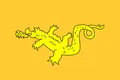 I. Great Hunnic EmpireRegarded as the first known Turkic polity.
- 48 – 216
 II. Western Hunnic EmpireListed by the Presidency with the dates 48–216 AD; İbrahim Kafesoğlu gives these dates for the Southern Hun state formed after the Hunnic union split in 48.
- 375 – 469
 III. European Hunnic EmpireThe Hunnic state that crossed the Volga westwards under Balamir; under Attila more than thirty peoples from the Aral Sea in the east to the Rhine in the west were bound to it.
- 420 – 552
 IV. White Hunnic EmpireAlso known as the Akhuns or Hephthalites; a Hunnic state that ruled a wide region stretching south of the Caspian Sea, into northern India and Inner Asia.
- 552 – 745
 V. Göktürk EmpireThe first state to use the name “Türk” as its official name; founded by Bumın Khagan in 552.
- 565 – 835
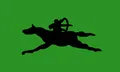 VI. Avar EmpireThe state that dominated Central Europe and the Balkans for about 250 years; its most powerful period was under Bayan Khagan.
- 651 – 983
 VII. Khazar EmpireA Turkic state that ruled north of the Black Sea and the Caucasus Mountains and around the Volga between the 7th and 11th centuries.
- 745 – 1368
 VIII. Uyghur StateThe Great Uyghur Khaganate and the Uyghur states founded in Turfan and Gansu after 840; according to the TDV encyclopedia, the Uyghurs are foremost among Turkic communities that reached a high level of culture.
- 940 – 1040
 IX. KarakhanidsA Turkic-Islamic dynasty that ruled Transoxiana and East Turkestan; the Kutadgu Bilig and the Dīwān Lughāt al-Turk are counted among the works of Karakhanid Turkic, the written language of this state.
- 962 – 1183
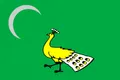 X. GhaznavidsA Muslim Turkic dynasty that ruled Khorasan, Afghanistan and northern India; it takes its name from its capital, Ghazni.
- 1040 – 1157
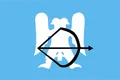 XI. Great Seljuk EmpireFounded by a dynasty of the Kınık tribe of the Oghuz; under Malikshah it stretched from Kashgar to the Aegean islands.
- 1097 – 1231
 XII. KhwarazmshahsA Turkic-Islamic dynasty that ruled Khwarazm and Iran between 1097 and 1231.
- 1236 – 1502
 XIII. Golden Horde StateA state that ruled the Kipchak Steppe with its centre at the city of Saray; most of its people were Turkic tribes.
- 1368 – 1501
 XIV. Great Timurid EmpireThe state founded by Timur, spread over a vast area centred on Samarkand.
- 1526 – 1858
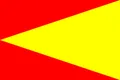 XV. Babur (Mughal) EmpireA Turkic state that ruled India between 1526 and 1858; its founder was Babur, of the Chagatai Turks.
- 1299 – 1922
 XVI. Ottoman EmpireThe longest-lived state of the Turkic-Islamic world; founded by Osman Bey, its sultanate was abolished in 1922.
- 1923 –
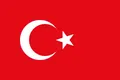 XVII. Republic of TürkiyeThe Republic of Türkiye, proclaimed on 29 October 1923, with Ankara as its capital; the sun on the Presidential standard symbolises the Republic of Türkiye.
References
- TDV İslâm Ansiklopedisi, “Türk — I. Tarih (Ahmet Taşağıl)”. Accessed 4 October 2026. islamansiklopedisi.org.tr/turk · archived copy
- TDV İslâm Ansiklopedisi, “Asya — İslâm Öncesi Türk Devletleri (İbrahim Kafesoğlu)”. Accessed 4 October 2026. islamansiklopedisi.org.tr/asya · archived copy
- Türk Dünyası Ansiklopedisi (ATAM), “Mete Han (Tilla Deniz Baykuzu)”. Accessed 4 October 2026. turkdunyasiansiklopedisi.gov.tr/detay/5100/Mete-Han- · archived copy
- TDV İslâm Ansiklopedisi, “Orhon Yazıtları (Mustafa S. Kaçalin)”. Accessed 4 October 2026. islamansiklopedisi.org.tr/orhon-yazitlari · archived copy
- TDV İslâm Ansiklopedisi, “Selçuklular — I. Büyük Selçuklular (Faruk Sümer, Osman Gazi Özgüdenli)”. Accessed 4 October 2026. islamansiklopedisi.org.tr/selcuklular · archived copy
- TDV İslâm Ansiklopedisi, “Karahanlılar (Abdülkerim Özaydın, Necmettin Hacıeminoğlu)”. Accessed 4 October 2026. islamansiklopedisi.org.tr/karahanlilar · archived copy
- TDV İslâm Ansiklopedisi, “Osmanlılar — Siyasî Tarih (Feridun Emecen, Kemal Beydilli)”. Accessed 4 October 2026. islamansiklopedisi.org.tr/osmanlilar · archived copy
- TDV İslâm Ansiklopedisi, “Edirne (M. Tayyib Gökbilgin)”. Accessed 4 October 2026. islamansiklopedisi.org.tr/edirne · archived copy
- T.C. Cumhurbaşkanlığı, “M. Kemal Atatürk”. Accessed 4 October 2026. tccb.gov.tr/cumhurbaskanlarimiz/kemal_ataturk · archived copy
- Türk Dil Kurumu, “Türk Dünyasında Tarihî Adım: Ortak Türk Alfabesi Temelinde Kazak ve Kırgız Türkçeleri İçin Alfabe Önerileri İlk Kez Kamuoyuna Açıklandı (16 Haziran 2026)”. Accessed 4 October 2026. tdk.gov.tr/icerik/basindan/turk-dunyasinda-tarihi-adim-ortak-turk-alfabesi-temelinde-kazak-ve-kirgiz-turkceleri-icin-alfabe-onerileri-ilk-kez-kamuoyuna-aciklandi · archived copy
The information on this page was checked twice against its sources (4 October 2026; 4 October 2026).