


















European Hunnic Empire
The Hunnic state that crossed the Volga westwards under Balamir; under Attila more than thirty peoples from the Aral Sea in the east to the Rhine in the west were bound to it.
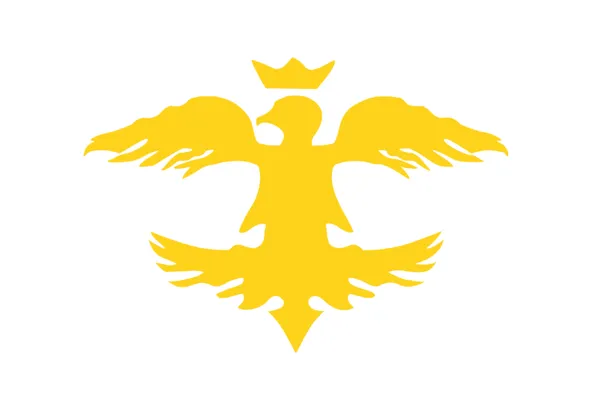
- Order
- III
- Period
- 375 – 469
- Years (duration)
- 94
- Centre
- First the Volga and Don; from around 400, Central Europe (under Rua the middle Danube and Tisza basins were brought under control)
About the state
According to the TDV encyclopedia, in the 370s Balamir stood at the head of the Huns along the Volga; in 374–375, under his leadership, the Hunnic masses crossed the Volga and advanced west. In the Migration Period that began with this advance many peoples changed places and a new ethnic situation emerged in Europe. In 378, in a battle near Adrianople, the Huns and Visigoths defeated Byzantium and killed Emperor Valens. Around the year 400 the Hunnic centre moved from the Volga to Central Europe.
After Rua’s death Attila and Bleda took the lead of the Huns. In his great Balkan campaign of 447 Attila routed Emperor Theodosius and made peace in return for a war indemnity and an annual tribute; in June 451 he faced the Western Roman commander Aetius in Gaul, at a place called Campus Mauriacus. According to the Turkic World Encyclopedia, the Hunnic polity came to an end after Attila’s son Dengizik was defeated and killed by the Eastern Roman army in 469.
Origins and Arrival in Europe
According to the Turkic World Encyclopedia, the name of the Huns, who appeared before Eastern Europe in the 4th century, means “tribe, people” in Turkish. The relationship of the European Huns with the Asian Huns has been debated since the mid-18th century; historical, archaeological and ethnographic documents, and the fact that some Hunnic names, above all those of Attila’s sons, are Turkish, have shown that they were the continuation of the Asian Huns. According to Taşağıl, after the Great Hunnic Empire in Asia weakened, a concentration of Turkic population formed in the steppes of western and northern Kazakhstan. The area around the Zhem, Emba and Ural rivers was the homeland of Hunnic tribes for more than two centuries; when the pastures became insufficient because of overcrowding, some Hunnic groups east of the Volga overran the steppes between the Kuban and Terek rivers in 330–350.
Balamir’s name appears only in Jordanes’ Gethica, which tells the history of the Goths, as “Rex Hunnorum”; the first Hunnic personal name recorded in Greek and Latin sources is Uldin, and the Turkic World Encyclopedia states that this name must be Uldız. Although E. A. Thompson claimed that Balamir never existed, most historians have regarded this view as unfounded. The Huns crossed the Ten (Don) River and entered the land of the Ostrogoths, who were ruled by Ermanaric and to whom 17 peoples were subject; thereafter the Ostrogoths were free in their internal affairs but bound to the Huns in their external affairs.
The Era of Uldız and Rua
According to the Turkic World Encyclopedia, between about 375 and 400 the Huns made no direct move against the European territories of the Eastern Roman Empire; at that time their main body was in its centres around the Don River in southern Russia. In 395 the Huns attacked the Roman Empire from two different directions: groups belonging to the Western Wing, whose centre of gravity was the Danube, crossed the frozen Danube and advanced as far as the Balkans, Illyria and Thrace. Units of the Eastern Wing, whose centre was around the Don, led by two beys named Basık and Kursık, headed for Anatolia and Syria by way of the Caucasus. According to Taşağıl, this group entered eastern Anatolia from the Caucasus, advanced as far as Erzurum, Malatya and Çukurova, besieged Antioch and Urfa and entered Syria.
Uldız, who was in charge of the Hunnic Western Wing, attacked the Eastern Roman Empire in 408 and demanded annual gold for peace. The Turkic World Encyclopedia relates that after this success Uldız pointed to the rising sun and said, “I will conquer everywhere from where the sun rises to where it sets.” Rua entered Macedonia and Thrace in 422 and, according to the Turkic World Encyclopedia, forced the Eastern Roman Empire to pay an annual tribute of 350 pounds (libra) of gold; the date of this treaty is disputed among researchers. Rua’s brothers were Oktar, Aybars and Muncuk; Aybars was most probably in charge of the Eastern Wing, while Oktar, at the head of the Western Wing, fought the Burgundians on the Rhine.
Under Rua, Western Rome began to take the place of Eastern Rome in foreign relations; Aetius, who stayed in the Hunnic land between 408 and 423, learned the Hunnic language and the Hunnic art of war there. Influenced in part by the developments of 425, Rua began to establish a new centre of Hunnic power in the middle Danube region, between the Körös and Maros rivers, not far from the borders of Eastern and Western Rome. According to the Hungary entry of the TDV Encyclopedia of Islam, the Hunnic Empire was governed from the Carpathian Basin between 420 and 455. Taşağıl dates Rua’s death to 433, while the Turkic World Encyclopedia dates it to 434.
The Age of Attila
According to the Turkic World Encyclopedia, nothing is known about Attila’s date of birth or his youth; the name of his father Muncuk is Turkish and means “pearl, bead, flag, banner”. The meaning of the name Attila, and whether it is Turkish, has always been debated; O. Pritsak argued that the name is Turkish and means “great sea, ocean” or “all-powerful ruler”. According to the Turkic World Encyclopedia, although his elder brother Bleda became ruler in 434, because of his superior abilities Attila conducted all the administrative and military affairs of the state until Bleda’s death in 445, and after that he became the sole ruler of the state. Attila concluded the peace talks begun under Rua in 434 at the town of Margus, on horseback, by making the Eastern Roman delegation accept his terms. According to Taşağıl, Attila also suppressed the revolts of the Akatir and the Ak Ogur (Saragur).
In the first Balkan campaign, which began in 441, the Huns took cities such as Singidunum (Belgrade), Sirmium and Naissus (Niš), and many strategic fortresses in the Danube region fell into Hunnic hands. According to Taşağıl, in the campaign of 447 the Hunnic army advanced in two columns and reached as far as Sofia, Plovdiv (Filibe), Preslav, Lüleburgaz and Büyükçekmece. Taşağıl states that at the end of this campaign Attila made peace with Emperor Theodosius in return for a war indemnity of 6,000 pounds (libra) of gold and an annual tribute of 2,100 pounds; the Turkic World Encyclopedia calls this treaty the Peace of Anatolius.
When Honoria, sister of the Western Roman emperor Valentinian III, asked Attila for help and sent him her betrothal ring, Attila demanded the region of Gaul and half of Roman dominion as a bride price; this demand was refused. In the Gallic campaign the Franks and Burgundians were defeated, and Metz was conquered on 7 April 451. At Campus Mauriacus the Huns under Attila’s command stood at the centre of the Hunnic army, the Ostrogoths on its left wing, and the Gepid chief Ardaric and other peoples on its right wing; according to the Turkic World Encyclopedia, no decisive result was achieved in the battle, in which both sides suffered heavy losses. The sources differ on the size of the army: Taşağıl gives the number of the Hunnic army as 200,000 and states that half of it consisted of Germanic peoples and Goths, while the Turkic World Encyclopedia writes that the actual size of the Hunnic army is estimated at 20,000–30,000. In 452 Attila crossed the Alps and entered Italy; at the confluence of the Po and Mincio rivers he received an embassy that included Pope Leo I, and at the end of the talks he accepted the peace offer and withdrew his army.
Statecraft, Army and Court
According to the Turkic World Encyclopedia, in the Turkic state organisation it was not certain that the throne would always pass to the eldest brother, and there was a tradition that the most capable of the heirs would come to power. According to the same source, the ultimate goal of Hunnic foreign policy, whose foundations were laid in the 400s, was “to conquer everywhere from where the sun rises to where it sets”: first the Eastern Roman Empire would be brought under pressure and good relations kept with Western Rome, then it would be the turn of Western Rome and the Sasanians. After the Peace of Margus, Attila subjugated many peoples of Slavic, Finnic, Germanic and Turkic origin. According to the Turkic World Encyclopedia, in Latin and Byzantine sources the success of the Huns was attributed to their skill in cavalry and archery, to which the Roman army was unaccustomed. According to Priscus’ account, Attila was moderate and frugal in every respect; while guests at the banquets in his palace were served from gold and silver cups and dishes, his own cup and the plate he ate from were of wood.
Dissolution and Legacy
Attila died in 453 and was succeeded by his eldest son İlek; but the struggles for the throne between İlek and his brothers and the revolts of the Germanic peoples soon led to the break-up of the state. In 454 İlek’s army was defeated by the army of the Gepid king Ardaric near the Nedao River, thought to be in present-day Hungary, and İlek lost his life in this battle. In 466 Attila’s sons Dengizik and İrnek sent an envoy to Emperor Leo I asking for a place on the Danube to be set aside where Romans and Huns could trade freely; the emperor did not permit this. Thereupon the brothers parted ways: while Dengizik wanted to fight, İrnek withdrew with most of the Huns to the western shores of the Black Sea. According to Taşağıl, the groups loyal to İrnek mixed with the Ogur Turks living north of the Black Sea and formed the Bulgars; the Turkic World Encyclopedia also writes that the Huns loyal to İrnek played an important role in the formation of the Bulgars and were regarded by the Bulgars as their ancestors.
According to the Turkic World Encyclopedia, while the Huns contributed to the history, cultural and social life, military organisation and world of thought of European societies, they also took certain elements in art and architecture from the Germanic peoples, above all the Goths, as well as from the Alans and the Romans. The same source states that the Migration Period, a result of the Hunnic advance, was among the fundamental factors in the ethnic shaping of today’s European population. Attila was seen in Europe as the “Scourge of God” (Flagellum Dei); according to the Turkic World Encyclopedia, fears and prejudices rather than facts were decisive in the image of Attila in the minds of Europeans.
Note on dates
The Turkic World Encyclopedia gives the end as 469, while Ahmet Taşağıl dates Dengizik’s defeat to 468. The Turkic World Encyclopedia dates the crossing of the Volga to the 360s (European Hun entry) or to the winter months of the 370s (Balamir entry); in these entries 374–375 is when the Don was crossed and the Ostrogoths were defeated.
About the flag
According to the Presidency, the view that the sun on the Presidential standard represents the Republic of Türkiye and its 16 stars the independent Turkic states was first put forward in 1969 by Akîp Özbek in his book “Türkiye Cumhurbaşkanlığı Forsu ve Taşıdığı Anlam”; Emrullah Öztürk, citing a document in the Presidential archives, notes that the view had already been voiced in 1962. The list of the 16 Turkic states and the shapes of their flags came to prominence after the Ajans-Türk press printed an album of the 16 Turkic states and their flags in 1969. The TDV Encyclopedia of Islam’s article “Bayrak” describes the flags of some of these states: according to Nesevî, the official flag of the Khwarazmshahs was black; the Golden Horde flag is shown as a red crescent on a white field; in the first half of the 19th century, the red banner with crescent and star was the national flag of the Ottoman state.