


















Republic of Türkiye
The Republic of Türkiye, proclaimed on 29 October 1923, with Ankara as its capital; the sun on the Presidential standard symbolises the Republic of Türkiye.
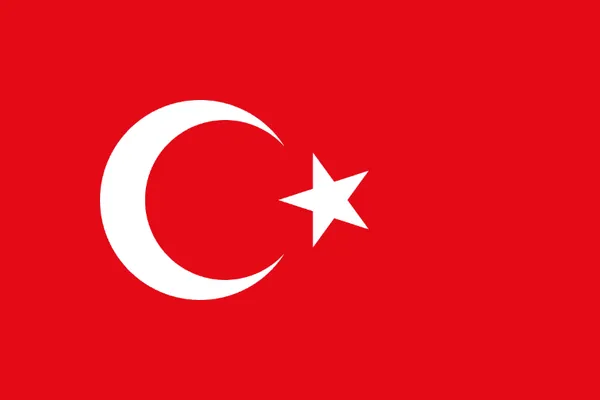
- Order
- XVII
- Period
- 1923 –
- Years since foundation
- 103
- Founder
- Mustafa Kemal Atatürk
- Centre
- Ankara
About the state
The Grand National Assembly of Türkiye began its work in Ankara on 23 April 1920. The Treaty of Lausanne, signed on 24 July 1923, recognised the independence of the new Turkish state. On 13 October 1923 Ankara became the seat of government of the Turkish state. On 29 October 1923 the Assembly proclaimed the Republic and Mustafa Kemal was unanimously elected the first President; on 30 October 1923 İsmet İnönü formed the first government of the Republic.
According to the Atatürk Research Center (ATAM), with the proclamation of the Republic, the rule “Sovereignty belongs unconditionally to the nation” took its clearest place in the government of the state. The Constitution refers to Atatürk as “the founder of the Republic of Türkiye”. Under Article 3 of the Constitution, the Turkish state is an indivisible whole with its territory and nation; its language is Turkish, its national anthem the İstiklal Marşı and its capital Ankara. By Law No. 2587 of 24 November 1934, Mustafa Kemal was given the surname Atatürk.
The National Struggle
Mustafa Kemal, who landed at Samsun by way of the Black Sea on 19 May 1919, issued the Amasya Circular on 22 June 1919. With the circular the Turkish nation was informed that the integrity of the homeland and the independence of the nation were in danger and that a congress would be convened in Sivas to save the homeland. Having resigned from the post given to him by the Ottoman government and from the army, Mustafa Kemal presided over the congresses that met in Erzurum on 23 July 1919 and in Sivas on 4 September 1919. At these congresses it was decided that the nation would defend the homeland against enemy occupation, that a provisional government would be formed, that a national assembly would be convened, and that mandates and protectorates would not be accepted. When the Grand National Assembly of Türkiye opened, Mustafa Kemal was elected President of the Assembly and of the Government; according to the Presidency, the opening of the Assembly was an important step towards the founding of the Republic of Türkiye. Mustafa Kemal announced to the world that the Turkish nation did not accept the Treaty of Sèvres signed between the Ottoman government and the Entente Powers. On 20 January 1921 a new Constitution based on national sovereignty was adopted.
The advance of the Greek forces, which had occupied İzmir with the help of the Entente Powers, was halted in 1921 by the First and Second Battles of İnönü. The Turkish Army led by Commander-in-Chief Mustafa Kemal Pasha routed the Greek Army, which had attacked again on 23 August 1921, and brought the Battle of Sakarya, fought day and night for twenty-two days, to a victorious end. Because of this victory the Grand National Assembly of Türkiye conferred on Mustafa Kemal the rank of “Marshal” and the title “Gazi”. The Turkish Army began its counter-offensive on 26 August 1922; after the Victory of 30 August 1922 it entered İzmir on 9 September 1922. On 11 October 1922 the Armistice of Mudanya was signed, and the Entente Powers withdrew from the Turkish lands they had occupied.
The Founding of the Republic
The Atatürk Research Centre describes the Treaty of Lausanne as a document of the international acceptance of the founding of the new Turkish State and as the registration by other countries of its political, economic and legal independence. With the Treaty of Lausanne the capitulations were abolished, and the foreign debts of the Ottoman state were regulated so that their terms of payment would not infringe independence. Until the proclamation of the Republic, the duties of head of state were carried out by Atatürk as President of the Grand National Assembly of Türkiye. According to the Atatürk Research Centre, the demand of some foreign countries that the new regime in Türkiye be defined more clearly before they ratified the Treaty of Lausanne, and the resignation of the Council of Executive Ministers on 27 October 1923, made it necessary to give the regime its name.
Atatürk, who was elected President four times in succession until his death in 1938, became the longest-serving holder of this office. Atatürk passed away on 10 November 1938 at Dolmabahçe Palace in Istanbul; after Anıtkabir was built, his body was laid to rest there on 10 November 1953.
The Constitutional Order
The Constitution currently in force was adopted by the Constituent Assembly on 18 October 1982 and submitted to a referendum on 7 November 1982. Under Article 1 of the Constitution, the State of Türkiye is a Republic. Under Article 2, the Republic of Türkiye is a democratic, secular and social state governed by the rule of law, within the notions of public peace, national solidarity and justice, respecting human rights, loyal to the nationalism of Atatürk, and based on the fundamental tenets set forth in the Preamble. The flag of the State is the white crescent and star on a red background, in the form prescribed by law. The provision of Article 1 of the Constitution that the form of the State is a Republic, the characteristics of the Republic in Article 2 and the provisions of Article 3 cannot be amended, nor can their amendment be proposed.
Legislative power is vested in the Grand National Assembly of Türkiye on behalf of the Turkish Nation; the Assembly is composed of six hundred deputies elected by universal suffrage. Executive power and function are exercised by the President of the Republic, who is the Head of State; the President is elected directly by the people, and the term of office is five years. Judicial power is exercised by independent and impartial courts on behalf of the Turkish Nation. Under the Constitution, women and men have equal rights.
The Reforms
The Atatürk Research Centre treats Atatürk’s reforms in the political, social, legal, cultural and economic fields. In the political field, after the abolition of the sultanate and the proclamation of the Republic, the caliphate was abolished by a law enacted on 3 March 1924. By an amendment made in 1928 the article “The religion of the Turkish State is Islam” was removed from the Constitution, and on 5 February 1937 secularism was included in the Constitution as one of the fundamental principles of the Republic of Türkiye. The social reforms listed by ATAM include women’s participation in public life and their equal treatment with men in social and political rights, the adoption of modern dress, the adoption of the Surname Law, and the adoption of international time, calendar, numerals and units of measurement. The hat and dress reform was carried out in 1925. The Surname Law enacted in 1934 required every Turk to bear a surname in addition to a given name; another law enacted the same year abolished epithets and titles such as Efendi, Bey, Paşa and Ağa.
In the economic field the tithe (aşar) was abolished in 1925, and the Law for the Encouragement of Industry was enacted in 1927. Giving importance to planned development, the first five-year plan was put into effect in 1933 and the second in 1937. The committee founded in 1930 to study Turkish history and civilisation scientifically was reorganised on 15 April 1931 under the name Society for the Study of Turkish History; the institution later took the name Turkish Historical Society. The Turkish Language Association was founded on Atatürk’s instructions on 12 July 1932 under the name Society for the Study of the Turkish Language. In Atatürk’s lifetime the first two volumes of the Göktürk (runic) inscriptions were published, and work also began on works such as the Diwan Lughat al-Turk and the Kutadgu Bilig. Through his will, Atatürk left his property to the Turkish Language Association and the Turkish Historical Society.
Foreign Policy and the Turkic World
In Atatürk’s time foreign policy initiatives such as entry into the League of Nations (1932), the Balkan Entente (1934), the Montreux Convention Regarding the Regime of the Straits (1936) and the Saadabad Pact (1937) were carried out. Atatürk’s intensive diplomatic efforts for Hatay to join the motherland bore fruit in 1939, after his death. According to the Ministry of Foreign Affairs, Turkish foreign policy is conducted in line with the ideal “Peace at Home, Peace in the World” of Mustafa Kemal Atatürk, the founder of the Republic. Türkiye is a member and founding member of European institutions, including the Council of Europe and the Organization for Security and Co-operation in Europe, and a member of NATO. It is also a founding member of regional organisations such as the Organization of the Black Sea Economic Cooperation and the Economic Cooperation Organization.
The Nakhchivan Agreement on the Establishment of the Cooperation Council of Turkic Speaking States was signed on 3 October 2009 by Türkiye, Azerbaijan, Kazakhstan and Kyrgyzstan. The organisation’s name was changed to “Organization of Turkic States” at the 8th Summit held in Istanbul on 12 November 2021. The Ministry of Foreign Affairs describes the Organization of Turkic States initiative, which embraces the civilisational roots of the Turkic world, as a successful example of expanding foreign relations on an institutional basis.