


















Ghaznavids
A Muslim Turkic dynasty that ruled Khorasan, Afghanistan and northern India; it takes its name from its capital, Ghazni.
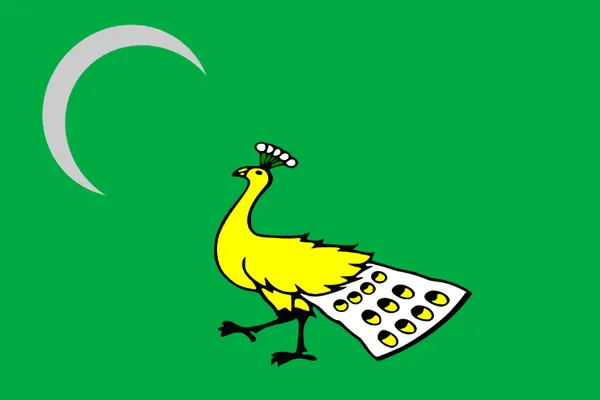
- Order
- X
- Period
- 962 – 1183
- Years (duration)
- 221
- Founder
- Alp Tegin (laid the foundations, 963); Sebük Tegin (true founder of the independent state)
- Centre
- Ghazni; in the final period, Lahore
About the state
Alp Tegin, commander of the Samanid armies of Khorasan, seized the city of Ghazni in eastern Afghanistan in January 963; this laid the foundations of the Ghaznavid state. According to the TDV encyclopedia, the true founder of the independent Ghaznavid state was Sebük Tegin; with his accession the state became a dynasty in which rule passed from father to son.
According to the TDV encyclopedia, Sultan Mahmud led seventeen campaigns into India, the most important being the Somnath campaign of 1025–1026. This victory made Mahmud known as the hero of the Sunni Islamic world, and the Abbasid caliph granted him the title “sultan”. Sultan Masud was defeated by Tuğrul Bey at Dandanakan in 1040. The Ghaznavid era was brilliant culturally as well as politically. The Ghurids put an end to the state in 1186.
Foundation and Origins
The dynasty is also called the Yaminids, after the epithet Yamin al-Dawla of Mahmud of Ghazni, and the Sebük Teginids, after his father. In the ninth and tenth centuries most of the Turks who entered the Islamic world by way of Transoxiana served the Abbasid caliphs and the Arab and Iranian governors in the provinces as soldiers or guards. Turkic governors and commanders are found in the Samanid state after the year 912. Alp Tegin, commander of the Samanid armies of Khorasan, had tried in 961 to place his own candidate on the Samanid throne and, having failed, was forced to withdraw to Ghazni. The Ghaznavid state did not rest only on the Turkic soldiers Alp Tegin had brought with him; there were also Turks who had come to the region many years earlier.
After Alp Tegin his son Abu Ishaq İbrâhim, and after his death Turkic commanders such as Bilge Tegin and Böri Tegin, came to head the state. In 977 Sebük Tegin, one of the men Alp Tegin trusted most, was brought in to replace Böri Tegin. Sebük Tegin was born in the Barshan region on the shores of Issyk-Kul, within the borders of Kyrgyzstan, and very probably belonged to one of the tribes attached to the Karluk Turks. Sebük Tegin took Bust and the Kusdar region and extended his rule as far as Tokharistan and Zamindawar. After defeating the Hindu Shahi raja, he advanced along the Kabul river as far as Peshawar in 986-87.
Political History
In 998 Mahmud defeated his brother İsmâil and seized the Ghaznavid throne. Mahmud had the khutba read in the name of the Abbasid caliph al-Qadir bi’llah, and the caliph gave him the epithet “Yamin al-Dawla wa Amin al-Milla”. After the Karakhanids did away with the Samanids in 999, the Ghaznavids and the Karakhanids divided that state’s lands between them. Mahmud also expanded his state westwards, defeating the Buyids in Iraq and adding Persian Iraq to his borders. When Mahmud died in Ghazni on 30 April 1030, his state stretched from the lands of Azerbaijan in the west to the Upper Ganges valley of India in the east, and from Khwarazm in the north to the shores of the Indian Ocean in the south.
The struggle for the throne that began after Mahmud’s death was won by his son Masud, who defeated his brother Muhammad. Against the Seljuks, who migrated into Khorasan in the spring of 1035, the Ghaznavid army was defeated at Hisar-i Tak that same year and then in 1037 and 1038, and Ghaznavid rule in Khorasan was brought to an end. In the reign of Sultan İbrâhim, in 1059, the long struggle with the Seljuks ended in a peace; this peace remained in force for about fifty years and was strengthened by marriage ties. İbrâhim, on whose coins the title “sultan” is seen for the first time, died in 1099 after reigning for forty years. Bahram Shah came to the throne in 1117 with Sanjar’s help; after the Ghurids burned the city of Ghazni in 1150-51 the Ghaznavids entered a process of decline, and after Khusraw Shah settled in Lahore they ruled over their lands in India.
State Organisation and Army
Among the Ghaznavids the sultan held absolute control over the administration of the state and was regarded as “God’s shadow on earth”; the ruler’s palace was organised on the basis of Iranian tradition. The divan organisation included divans such as the Divan-i Wizarat, Divan-i Risalat, Divan-i Arz, Divan-i Istifa and Divan-i Barid. There was a kadi in every city and a chief kadi in every province, while the ruler himself presided over the Divan-i Mazalim. In a province the sâhibdîvân, who headed the civil administration, was responsible for collecting taxes and for administrative affairs.
The Ghaznavid army generally consisted of ghulams, regular units, provincial troops, paid soldiers and volunteers. According to the TDV Encyclopedia of Islam, most of the ghulams were Turks, numbering about 4,000-6,000; groups such as the Oghuz, Karluks, Yağmas and Khalajs were also used as auxiliary forces. War elephants taken from India as tribute were an important element of the army, and the number of elephants in the army was around 1,700. At Sultan Mahmud’s review at Shabahar in 1023 the army numbered around 54,000.
Culture, Learning and Architecture
Even if the report that there were 400 poets at the court of Sultan Mahmud, where the official language was Persian, is considered an exaggeration, it shows the importance given to poetry and literature. Poets such as Unsuri, Farrukhi Sistani and Asjadi, and above all Firdawsi, received Sultan Mahmud’s favours. According to the TDV Encyclopedia of Islam, this period was also brilliant in historiography, and its leading historians were Utbi, Gardizi and Bayhaqi. When Sultan Mahmud took control of Khwarazm he brought al-Biruni to Ghazni; al-Biruni’s contacts in India, where he took part in the sultan’s campaigns, led him to write his great work Tahqiq ma li’l-Hind. According to the TDV Encyclopedia of Islam, this book is the first Islamic work to examine the beliefs and customs of the Hindus impartially.
Mahmud had markets, bridges and aqueducts built. Sultan Masud drew the plan of the palace in Ghazni himself and supervised the construction of this palace, which was completed in four years. According to the TDV Encyclopedia of Islam, the great palace uncovered by French archaeologists at Lashkari Bazar in Bust reveals the wealth and splendour of the Ghaznavid palaces. In the time of Mahmud of Ghazni, “tenge” coins bearing Arabic and Sanskrit inscriptions were struck in Lahore; the sultans also had dinars and dirhams struck in the style of the Abbasid caliphs.
Legacy
According to the TDV encyclopedia, the main role of the Ghaznavids in Turkic and Islamic history was to open the way to the conquest of northern India, giving Islam a strong foothold in the Punjab and preparing the ground for the later conquests of India. Through his campaigns Sultan Mahmud laid the foundations of a Turkic-Islamic rule in India that would last for centuries. The spread of Islam in the regions under his rule was a primary factor in the formation of the independent state of Pakistan, founded in 1947. It was also thanks to Sultan Mahmud that Persian developed greatly and spread across the lands of India. Sultan Mahmud and Masud have remained in memory as popular heroes, and in later Persian literature Mahmud appears as a ruler who embodied justice and fairness.
Note on dates
The TDV encyclopedia dates the dynasty to 963–1186 (Ghazni taken in January 963, end in 1186). The years 962 and 1183 in the Presidency list do not appear in it.
About the flag
According to the Presidency, the view that the sun on the Presidential standard represents the Republic of Türkiye and its 16 stars the independent Turkic states was first put forward in 1969 by Akîp Özbek in his book “Türkiye Cumhurbaşkanlığı Forsu ve Taşıdığı Anlam”; Emrullah Öztürk, citing a document in the Presidential archives, notes that the view had already been voiced in 1962. The list of the 16 Turkic states and the shapes of their flags came to prominence after the Ajans-Türk press printed an album of the 16 Turkic states and their flags in 1969. The TDV Encyclopedia of Islam’s article “Bayrak” describes the flags of some of these states: according to Nesevî, the official flag of the Khwarazmshahs was black; the Golden Horde flag is shown as a red crescent on a white field; in the first half of the 19th century, the red banner with crescent and star was the national flag of the Ottoman state.