


















Great Hunnic Empire
Regarded as the first known Turkic polity.
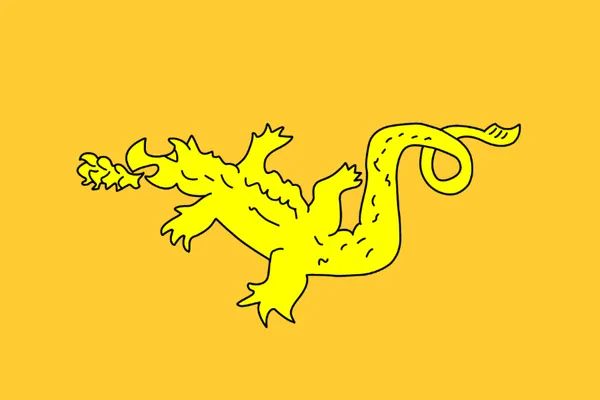
- Order
- I
- Period
- 204 BC – 216 AD
- Years (duration)
- 419
- Founder
- Mete Khan (took the throne in 209 BC)
- Centre
- The basin of the Orkhon, Selenga, Onon and Ongin rivers (Mongolia)
About the state
The first Hunnic ruler known by name, T’ou-man, appears on the Hunnic throne in 221 BC. His son Mete (Mo-tun) took the throne in 209 BC and strengthened the state. The state’s borders stretched from Korea to the Aral Sea and from Lake Baikal to the Great Wall, and China was made to pay tribute.
Governed from the centre, the state was administered through a dual organisation of right and left wings. According to the Turkic World Encyclopedia, the decimal system seen in Mete’s time is still used by armies around the world, and the founding year of the state built with this army is accepted as the founding date of the Turkish Land Forces. According to İbrahim Kafesoğlu, the Asian Huns set an example for all later Turkic polities in their social structure, law and army.
Name and Emergence
According to İbrahim Kafesoğlu, the Turks already had a certain administrative and military organisation before they appeared on the stage of history in the 4th century BC, under the name Hiung-nu in the Chinese annals, in the area between north-western China and the Orkhon River. According to the Turkic World Encyclopedia, in different periods Chinese sources gave the Huns various names such as Kuei-fang, Yen-yun, Hsün-yü and Hsien-yün; from 318 BC onwards the name was written as Hsiung-nu. Ahmet Taşağıl notes that a Sogdian text dated AD 311 shows that the word Hsiung-nu, found in a treaty text dated 318 BC, corresponds to the name Hun. According to the most widely accepted views, the word Hun means the Turkish “kün”, that is, “people”. According to the Turkic World Encyclopedia, the Huns, having lost the Ordos region under the Ch’in dynasty (221–206 BC), when China was united under a single banner, had to withdraw further north. Mete, whose father T’ou-man had placed a tümen of soldiers under his command, turned this unit into an obedient and loyal army through very strict training.
The Reign of Mete Khan
After taking the throne, Mete first defeated the Tung-hu, who threatened the Huns in the east, and then the Yüe-chi in the south. When the Tung-hu demanded an empty stretch of land between the two states, Mete said, “Land is the foundation of a state. How could it be given to them?”; he then attacked the Tung-hu and defeated them. Citing the Shih-chi, Kafesoğlu relates that Mete answered the Tung-hu that he had no authority to give away property belonging to the nation; according to him, among the early Turks the country was not the private property of the ruling family but the property of the nation. According to Taşağıl, Mete also brought twenty-six tribes and small states in Central Asia, such as the Kyrgyz and the Ting-ling, under his rule. According to the Turkic World Encyclopedia, in a letter to the Chinese emperor Mete relates that he had united “all the peoples who draw the bow” under his rule and had taken the 26 small city-states of the Tarim Basin.
Once he had gained the upper hand in the north, Mete moved his royal camp from the Yin-shan Mountains in the south to the north, south of Lake Baikal. The new capital, east of the Arhun River near Koşo Saydam, was given the name Lung Ch’eng, that is, “Dragon City”. Mete besieged Kao-tzu, founder of the Han dynasty that had come to power in China in 206 BC, for seven days on the Pai-teng plateau near P’ing-ch’eng. Taşağıl dates this siege to 199 BC, the Asian Hun entry of the Turkic World Encyclopedia to 200 BC, and Ayşe Onat to 201–200 BC. After the siege, under a treaty concluded in 197 BC and called Ho-ch’in, a Chinese princess was sent to Mete as a bride. According to the Turkic World Encyclopedia, this form of treaty was repeated more than ten times until about 135 BC and became a centuries-long tradition between China and various Turkic states. According to the Turkic World Encyclopedia, when Mete died in 174 BC, the Great Hunnic Empire was at the height of its power.
After Mete: Decline and Division
According to Taşağıl, Hunnic supremacy continued under Mete’s son Chi-yü (Lao-shang) (174–160 BC) and during the first twenty years of the reign of his grandson Chün-ch’en (160–126 BC). According to the Turkic World Encyclopedia, in 166 BC a campaign was launched against the Yüe-chi, who had migrated to the Gansu region; defeated, the Yüe-chi were forced to settle in Western Turkestan. The Huns lost the Ordos for good in 128 BC; according to the Turkic World Encyclopedia, the battle of 119 BC against a Chinese army that had crossed the Gobi Desert, which ended with heavy losses for both sides, started the period of decline in the Hunnic state. According to Taşağıl, the Huns, who lost their military superiority over China in this battle, kept their independence until 56 BC.
According to the same author, when Ho-han-ye, who took the throne in 56 BC, saw submission to China as the only remedy, those who opposed this migrated to Western Turkestan under the ruler’s brother Chih-ch’i and founded a separate state. Kafesoğlu dates this first division to 54 BC and Onat to 58 BC. Chih-ch’i’s state in Western Turkestan was destroyed in 36 BC in the face of a large Chinese army sent against it. According to Taşağıl, a great famine that broke out in the Hunnic land in AD 46 weakened the state, and in 48 the Hunnic union split into a northern and a southern part. Taşağıl dates the end of the Northern Hun state to 93, Kafesoğlu to the years around 156.
State Organisation and Army
According to Kafesoğlu, the title of the Hunnic ruler was Tan-hu, later read as Şan-yü; the Turkic World Encyclopedia writes the same title as Ch’an-yü. Kafesoğlu states that the original Turkish form of the name Mo-tun was Beğ-tun, meaning “of noble (bey) lineage”. According to the TDV Encyclopedia of Islam, it is understood that the title yabgu, seen in Turkic states from the Asian Huns to the Great Seljuks, was recorded in old Chinese sources as “hiep-ho” and had been in use in the Asian Hunnic Empire since the 2nd century BC. According to Ahmet Taşağıl, the Asian Huns had a state assembly; the ruler, the khatun, the tegins, all members of the ruling family, the leaders of the other tribes and foreign vassals were obliged to attend this meeting, held in spring. Failing to attend was regarded as rebellion against the state; with its powers to confirm the ruler, to elect a khagan when necessary and to make töre, the assembly was a kind of legislative body. Kafesoğlu counts Mete among the rulers who strengthened the töre with the necessary changes.
According to Kafesoğlu, the Chinese annal Shih-chi, which gives the first reliable information about the Turkic army, records that the decimal system devised by Mete was applied first in the military and then in the civil sphere. In this system the unit of 10,000 called the tümen was divided successively into units of 1,000, 100 and 10. The Turkic World Encyclopedia writes that, besides the decimal system, Mete also invented the whistling arrow. According to Chinese documents, the northern peoples of China before the Huns did not know the methods of mounted warfare; the Hunnic archer was trained from an early age and grew up to be an excellent mounted warrior. The Turkic World Encyclopedia describes the Hunnic state, with its army of highly manoeuvrable and fast cavalry units, as a typical steppe state.
Economy, Towns and Relations with China
The Huns were a community that lived from animal husbandry and led the life of nomadic mounted herders, moving between water sources and pastures. Kafesoğlu nevertheless notes that the Huns grew millet, wheat and beans. Archaeological work carried out in Russia, Mongolia and northern China since the second quarter of the 20th century has shown that settled communities lived in the Hunnic Empire alongside nomads. According to the Turkic World Encyclopedia, dozens of Hunnic towns, around twenty small settlements and about a hundred kurgan sites have been identified in northern and central Mongolia and the Trans-Baikal region. Ivolga, the subject of scholarly study for about a century, is a Hunnic settlement and cemetery on the Selenga River, 16 km south-west of Ulan-Ude in today’s Republic of Buryatia. This frontier town, fortified with four earthen ramparts, was a centre of administration, crafts and agriculture; its inhabitants engaged in hunting, fishing, cattle breeding, agriculture, metallurgy and pottery. Agricultural tools such as ploughs, sickles and hand mills, found in archaeological work at Hunnic settlements, show that some settled communities practised farming in the Hunnic towns.
According to Ayşe Onat, the treaty of peace and friendship between Mete and the Chinese emperor was as important economically as it was politically; under this treaty China undertook to give the Huns silk, wine, rice and other foodstuffs every year. Under the treaty the two rulers were to be regarded as brothers, and the Great Wall was to be the border between the two states. When the treaty was renewed with Chün-ch’en in the first years of Emperor Ching’s reign, the right of the Huns to trade freely in the border markets was also written into the treaty text. Based on the documents, Onat thinks that in trade the Huns mostly sold cattle, sheep, horses and hides and bought silk goods and food from China.
Legacy
According to Kafesoğlu, the Göktürk Khaganate was founded in the 6th century by descendants of the Asian Huns, and Bumın’s Aşına family descended from Mo-tun’s dynasty through the Southern Hun tanhus. Kafesoğlu states that the phrase “from where the sun rises to where it sets”, expressing the Turkic ruler’s ideal of placing all people on earth under the protection of a universal töre, was kept alive in every Turkic state from the Asian Huns onwards, including the Ottomans. The Turkic World Encyclopedia states that the urban culture that took shape in Hunnic towns, Ivolga above all, laid the foundation for the understanding of urbanisation of later Turkic states, above all the Göktürk and Uyghur khaganates. According to the same source, the Huns influenced in every respect not only the Turkic states but also neighbouring states and peoples.
Note on dates
The Presidency list gives 204 BC–216 AD. The academic sources consulted do not mention 204 BC: the TDV encyclopedia and the Turkic World Encyclopedia place T’ou-man, the first ruler known by name, in 221 BC and Mete’s accession in 209 BC; Kafesoğlu notes that the first written document about the state dates from 318 BC. The Turkic World Encyclopedia gives 216 AD, the year the last Hunnic ruler died, as the date of the empire’s fall.
About the flag
According to the Presidency, the view that the sun on the Presidential standard represents the Republic of Türkiye and its 16 stars the independent Turkic states was first put forward in 1969 by Akîp Özbek in his book “Türkiye Cumhurbaşkanlığı Forsu ve Taşıdığı Anlam”; Emrullah Öztürk, citing a document in the Presidential archives, notes that the view had already been voiced in 1962. The list of the 16 Turkic states and the shapes of their flags came to prominence after the Ajans-Türk press printed an album of the 16 Turkic states and their flags in 1969. The TDV Encyclopedia of Islam’s article “Bayrak” describes the flags of some of these states: according to Nesevî, the official flag of the Khwarazmshahs was black; the Golden Horde flag is shown as a red crescent on a white field; in the first half of the 19th century, the red banner with crescent and star was the national flag of the Ottoman state.