


















Karakhanids
A Turkic-Islamic dynasty that ruled Transoxiana and East Turkestan; the Kutadgu Bilig and the Dīwān Lughāt al-Turk are counted among the works of Karakhanid Turkic, the written language of this state.
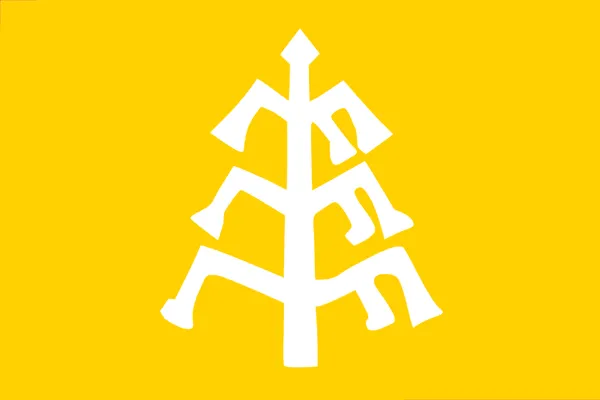
- Order
- IX
- Period
- 940 – 1040
- Years (duration)
- 100
- Founder
- Bilge Kül Kadır Khan (recorded as the first khagan; doubted by some researchers)
- Centre
- Balasagun and Kashgar
About the state
The sources record Bilge Kül Kadır Khan as the first khagan of the dynasty, although some researchers regard this information with doubt. Views also differ on which tribe founded it. Satuk, the nephew of Oğulçak, became a Muslim, took the name Abdülkerim and worked to spread Islam in the western lands of the Karakhanids. After the first conquests Balasagun, together with Kashgar, became one of the state’s important centres. In 999 İlig Khan Nasr took Bukhara, the Samanid capital, and the Samanid state effectively came to an end.
The state was governed in two parts, east and west; from 1041–42 it was split into the Eastern and Western Karakhanids. The Karakhanids adopted the old Turkic idea of sovereignty, believing that “kut”, the authority and power to rule, was granted by God. The written language of the state is called Karakhanid or Khaqani Turkic; Yusuf Khass Hajib’s Kutadgu Bilig (1069) and Mahmud al-Kashgari’s Dīwān Lughāt al-Turk (1074) were written in this period. The Karakhanids passed into history in 1212.
Name and Origins
The name Karakhanids was first given to the state by the Russian orientalist Vasily Vasilyevich Grigoryev in an article he wrote in 1874; it comes from the word kara, meaning “height and loftiness”, which members of the dynasty used in their titles. In the sources of Islamic history the dynasty is referred to by names such as Hâkāniyye (Khaqanids), Âl-i Hâkan and Âl-i Efrâsiyâb et-Türkî. Mahmud al-Kashgari, too, uses the expression “Khaqanid Turks” when speaking of them. For this reason the Encyclopedia of the Turkic World prefers the name “Turkic Khaganate”, one of the state’s original names in the sources.
According to the TDV encyclopedia, seven hypotheses have been put forward on the origin of the dynasty: Uyghur, Türkmen, Yağma, Karluk, Karluk-Yağma, Çiğil and T’u-chüeh A-shih-na (Tukyu-Göktürk). While Omeljan Pritsak links the dynasty to the Karluks, Reşat Genç argues that the Karluks were in no position to form a strong political entity at this time and holds that the founders were the Yağmas. According to Genç, after the fall of the Uyghur state in Ötüken in 840 the Yağmas came to Kashgar and later also took the Chu and Ili valleys. According to the Encyclopedia of the Turkic World, however, the khaganate was founded by the Karluk Turks; the Karluk Yabghu state entered its khaganate period in 840, the year in which Bilge Kadır Khan, a descendant of the Ashina line, first appeared on the stage of history.
Political History
After Satuk Bughra Khan became a Muslim, the struggle with the Samanids gave way to friendship and cooperation; Satuk Bughra Khan, who died in 955, was buried at Artux near Kashgar. Harun Bughra Khan took Samarkand at the beginning of 992 and then also captured the Samanid capital Bukhara, but he died the same year while returning to Kashgar. İlig Khan Nasr is known as the first Karakhanid to recognise the Abbasid caliph al-Qadir bi’llah as his suzerain. A treaty had been made with Mahmud of Ghazni accepting the Amu Darya as the border; in 1006 İlig Khan Nasr sent two armies to seize Khorasan, which under the agreement he had left to the Ghaznavids, but he was defeated in the battle of Balkh in 1008. Thus the Karakhanids’ last attempt to take Khorasan also ended in failure.
In the reign of Arslan Khan Süleyman (1032-1056), the first ruler of the Eastern Karakhanids, a struggle was waged against non-Muslim Turks, and in 1044 nomadic Turks of 10,000 tents settled between Bulghar and Balasagun accepted Islam. In the west, peace was made between Shams al-Mulk Nasr II and the Seljuks in 1074 through the efforts of Nizam al-Mulk, and Seljuk sovereignty was recognised in Transoxiana. In 1089 the Western Karakhanids were made subject to the Seljuks, and the Eastern Karakhanids also recognised the Seljuks as their suzerains. After Sanjar and Mahmud II were defeated on the Qatwan steppe in 1141, İbrâhim III ascended the Western Karakhanid throne under the protection of the Kara Khitai. The Eastern Karakhanids came to an end in 1210-11; after Osman, the last ruler of the Western Karakhanids, was put to death by the Khwarazmshah Muhammad, Samarkand became the Khwarazmshah Muhammad’s capital.
State Organisation and Army
Rulership was regarded as sacred, and kut was held to pass by blood to all of the father’s sons born of the khatun. Karakhanid rulers used the titles beg, ilig, khaqan and khan, together with names and epithets such as arslan, bughra, tonga, tamghach, kara, kadır and kılıç. At the head of the palace organisation stood the ulu hâcib, while at the head of the central administration the vizier, called yuğruş, conducted state affairs on the ruler’s behalf. The ruler’s decrees were called yarlık, and the scribes who drafted decrees written in the Uyghur script were called ılımga. Karakhanid rulers presided in person over the mazalim courts and could also appoint a kadi to deputise for them.
The army consisted of the palace guards, the household army, forces attached to members of the dynasty, governors and other statesmen, and the forces of subject Turkic tribes such as the Çiğil and the Karluk. Palace guards called yatgak and turgak protected the ruler and the palace night and day. The names and entitlements of the soldiers were recorded in a register called the Ay bitiği. It can be said that the decimal system, known to have been used since the Huns, was also applied in the Karakhanid army; the smallest military unit was called an otag and its commander an otağbaşı. The commander at the head of each army was known by the title subaşı.
Language, Literature and Culture
Because Karakhanid Turkic was the common literary language of Central Asian Turkic literature until Chagatai Turkic took shape, it has also been called Common Central Asian Turkic; however, according to the TDV Encyclopedia of Islam, since it is not appropriate to name languages, dialects and accents after geographical names, this designation is not considered correct. In this period the Arabic script began to be used alongside the Uyghur script, and many words connected with Buddhism were replaced by Arabic and Persian words connected with Islam. The surviving specimens of this language also include Qur’an translations, Edib Ahmed Yüknekî’s Atebetü’l-hakāyık of 101 quatrains, and the Dîvân-ı Hikmet, thought to have been written in the first half of the twelfth century. The presence of 8,624 headwords in the Dīwān Lughāt al-Turk and 2,961 in the Kutadgu Bilig gives an idea of the richness of this language’s vocabulary.
Yusuf Khass Hajib, born into a noble family in Balasagun, wrote the Kutadgu Bilig in Balasagun over a year and a half, completed it in Kashgar and presented it to Tavgach Ulugh Bughra Khan; the khaqan, appreciating the poet’s talent, gave him the office of khass hajib. The work is built on four principles: just law is represented by Kün-Toğdı, happiness by Ay-Toldı, intellect by Ögdülmiş and the end of life by Odgurmış. Mahmud al-Kashgari began writing the Dīwān Lughāt al-Turk on 25 January 1072 and completed it on 12 February 1074. The work, the first dictionary of the Turkic language, is at the same time a grammar book and an encyclopaedic work containing information on Turkic history, geography, mythology, folklore and folk literature. While writing his work, Mahmud al-Kashgari travelled one by one through the Turkic lands of the time and relied on language material he had collected himself.
Architecture and Urban Life
The first works in the traceable development of Islamic-period Turkic architecture in Asia appear in the Karakhanid era; the earliest buildings were of mud brick, while later examples of brick architecture were produced. The Kalan Minaret in Bukhara, with its inscription giving the name of Arslan Khan and the date 1127, is an example of Karakhanid brickwork. The Arab Ata Mausoleum at Tim in Uzbekistan, dated 977-978, is the most distinctive example of the Karakhanid mausoleum type. According to the TDV Encyclopedia of Islam, because the Karakhanids were in constant contact with the Ghaznavids and the Great Seljuks, they played an important role in the sources and spread of Turkic architecture in Asia.
İbrâhim b. Nasr (1052-1068), known as the Great Tamghach Khan, founded charitable institutions in many cities, above all Bukhara and Samarkand, and had a madrasa and a hospital built in Samarkand. According to the Encyclopedia of the Turkic World, his son Shams al-Mulk Nasr, by placing the title “Sultan of the East and of China” on his coins, was the first in the Turkic Khaganate to use the title “sultan”. In the years 1075-1102, when Tamghach Bughra Khan Abu Ali Hasan reigned as great khagan, Kashgar became a cultural centre. Yusuf Khass Hajib dedicated the Kutadgu Bilig to this ruler, and Abu’l-Futuh Abd al-Ghafir al-Almai also wrote his Tarikh-i Kashghar in this period.
Note on dates
The TDV encyclopedia dates the dynasty to 840–1212. The years 940 and 1040 in the Presidency list do not appear in it as founding or end dates; the split into Eastern and Western states took place in 1041–42.
About the flag
According to the Presidency, the view that the sun on the Presidential standard represents the Republic of Türkiye and its 16 stars the independent Turkic states was first put forward in 1969 by Akîp Özbek in his book “Türkiye Cumhurbaşkanlığı Forsu ve Taşıdığı Anlam”; Emrullah Öztürk, citing a document in the Presidential archives, notes that the view had already been voiced in 1962. The list of the 16 Turkic states and the shapes of their flags came to prominence after the Ajans-Türk press printed an album of the 16 Turkic states and their flags in 1969. The TDV Encyclopedia of Islam’s article “Bayrak” describes the flags of some of these states: according to Nesevî, the official flag of the Khwarazmshahs was black; the Golden Horde flag is shown as a red crescent on a white field; in the first half of the 19th century, the red banner with crescent and star was the national flag of the Ottoman state.