


















Great Seljuk Empire
Founded by a dynasty of the Kınık tribe of the Oghuz; under Malikshah it stretched from Kashgar to the Aegean islands.
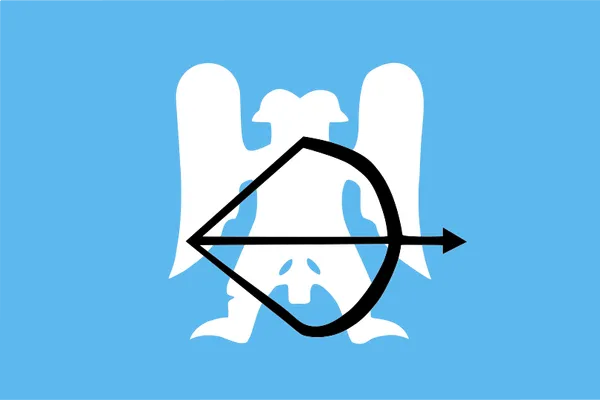
- Order
- XI
- Period
- 1040 – 1157
- Years (duration)
- 117
- Founder
- Tuğrul Bey (first ruler, 1040–1063)
- Centre
- Nishapur, Rey, Isfahan; under Sanjar, Merv
About the state
The dynasty takes its name from Selçuk Bey, army commander of the Oghuz state. The foundations of the state were laid when Tuğrul Bey and Çağrı Bey crossed into Khorasan. After the victory of Dandanakan on 23 May 1040, Tuğrul Bey became the first ruler of the Great Seljuk state (1040–1063). The state’s first political centre was Nishapur; under Tuğrul Bey the capital became Rey, and under Sultan Malikshah, Isfahan.
The victory of Manzikert on 26 August 1071 enabled the Turkish conquest of Anatolia. According to the TDV encyclopedia, under Malikshah the state reached its widest borders; with the efforts of Nizam al-Mulk among others, its administration took a perfected form and the Nizamiyya madrasas gained worldwide fame. With the death of Sultan Sanjar in 1157 the Great Seljuk state withdrew from the stage of history.
Foundation and Origins
Selçuk Bey had five sons named Mîkâil, Arslan (İsrâil), Mûsâ, Yûsuf and Yûnus; Mîkâil’s sons Dâvud (Çağrı Bey) and Muhammed (Tuğrul Bey) were brought up by their grandfather. Selçuk Bey probably came from Yenikent to the city of Jand in 961 and made it the centre of the principality. After Selçuk Bey’s death around 1007, Arslan Yabgu became head of the family; but Mahmud of Ghazni had him arrested by a ruse and in 1025 imprisoned him in the fortress of Kalinjar in India. Çağrı Bey, for his part, had set out between 1016 and 1021 at the head of a 3,000-strong cavalry unit from Khorasan towards Anatolia and, after staying for a time in Armenian and Georgian lands, had returned to Tuğrul Bey.
In May 1035 Tuğrul and Çağrı Bey, together with their uncles and their forces, crossed the Oxus and reached the Ghaznavid lands of Khorasan with 10,000 horsemen. When the Ghaznavid army was routed near Nasa on 29 June 1035, Sultan Masud chose peace and gave Dihistan to Çağrı Bey, Nasa to Tuğrul Bey and Farawa to Mûsâ Yabgu. After the Ghaznavids suffered a heavy defeat at Talhab near Sarakhs in 1038, Çağrı Bey entered Merv and Tuğrul Bey Nishapur, and the khutba was read in their names in these cities with the title “king of kings”. At Dandanakan, after a group from the Ghaznavid Turkic household army went over to the Seljuks, an attack routed the Ghaznavid army; after the battle Tuğrul Bey sat on a throne and was hailed as emir of Khorasan.
Political History
In accordance with the old Turkic state tradition the lands were divided among members of the dynasty: the region centred on Merv was given to Çağrı Bey and the Bust and Sistan area centred on Herat to Mûsâ Yabgu, while Tuğrul Bey, who remained in the capital Nishapur, took Iraq and the western lands. In 1055 Tuğrul Bey went to Baghdad at the invitation of Caliph al-Qaim bi-amr Allah; with the imprisonment of the Buyid ruler al-Malik al-Rahim and his death the same year, Buyid political rule came to an end. In January 1058, at a ceremony, the caliph clothed Tuğrul Bey in seven black robes of honour, thereby conferring world sovereignty on the Seljuk ruler, and gave him the title “king of the East and the West”. Alparslan united the lands of his father Çağrı Bey and his uncle Tuğrul Bey, became ruler of a great empire stretching from the Oxus to the Tigris, and appointed Nizam al-Mulk as vizier. According to the TDV Encyclopedia of Islam, at Manzikert the Seljuk army of about 50,000 defeated the Byzantine army of 200,000 made up of various nations; Emperor Romanos Diogenes was taken prisoner, but according to the sources Alparslan treated him not as a prisoner of war but as a guest sovereign.
Malikshah made the struggle against Hasan Sabbah and the Batinis a state policy; Vizier Nizam al-Mulk was killed by the Batinis in 1092, and the sultan died in Baghdad about a month later. During the twelve-year struggle for the throne that broke out among members of the dynasty after Malikshah’s death, the Crusaders achieved their aims and the empire entered a period of decline. Muhammad Tapar succeeded in reuniting the Seljuk state; after his death in 1118 Sanjar proclaimed his sultanate, and with the treaty made in 1119 the Seljuk state of Iraq was founded. Sanjar could not prevent the Buddhist Kara Khitai from establishing their rule in Transoxiana; in the last years of his reign he was defeated by the Oghuz and remained their captive for three years from April 1153.
State Organisation and Army
Among the Seljuks the sole representative of sovereignty was the ruler, styled “es-sultânü’l-a‘zam”. According to Turkic custom, rulers were charged with governing people through “kut”, a gift of God, and the Seljuk rulers, continuing this tradition, believed that their office had been given to them by God. Tuğrul Bey was the first Turkic-Islamic ruler to use the title “es-sultânü’l-muazzam” on his coins. With few exceptions, the upper obverse of all Seljuk coins bears the bow-and-arrow sign, the symbol of Oghuz sovereignty. The great divan, presided over by the vizier, consisted of four divans: the Divan-i Insha wa Tughra, the Divan-i Zimam wa Istifa, the Divan-i Arz and the Divan-i Ishraf-i Mamalik.
The core of the army was formed by the palace ghulams charged with protecting the sultan and the palace, and by the household army. According to Rawandi, the number of cavalry forces recorded in the divan registers was 46,000. Because maintaining such a large standing army placed a heavy burden on the treasury, the sultans granted provinces or districts as iqta; the iqta holders in turn maintained soldiers in return for the revenues. In the founding period of the state its main military support came from the nomadic Türkmens. From the Great Seljuks onwards the sultans presided two days a week over the Divan-i Mazalim, which heard cases falling outside sharia jurisdiction.
Society and Economy
The Great Seljuk state consisted of three large social strata: nomads, peasants and townspeople. The nomadic Turks were concentrated in eastern and northern Khorasan, the southern foothills of the Alborz mountains, north-western Persian Iraq and Azerbaijan; their most important property was their flocks of sheep and herds of horses. The directing of the Türkmens westwards helped them gather in Azerbaijan and Anatolia and opened the doors of their new homeland to them. In the reigns of Sultan Malikshah and Sanjar new irrigation canals were opened in Iraq, Khorasan and Khwarazm, and thanks to them agricultural production increased.
Trade caravans could travel safely in Transoxiana, Khwarazm, Iran, Azerbaijan, Iraq, Syria and Anatolia. In the time of Sultan Malikshah commercial taxes and customs duties together amounted to 600,000 dinars; in this period the Byzantine state also paid tribute to the Seljuks. According to the TDV Encyclopedia of Islam, in the time of Sultan Sanjar, Merv was the most important centre of Seljuk cultural life, with a population of around 150,000. The first Seljuk hospital was opened in Nishapur in the time of Nizam al-Mulk, and mobile hospitals were also set up within the army.
Religion, Language and Culture
Nizam al-Mulk, with permission from Sultan Alparslan, founded madrasas in various cities of the country in order to strengthen the Sunni creed and to train the officials the state needed. Construction of the most famous of them, the Nizamiyya Madrasa of Baghdad, began in November 1065, and the madrasa opened on 22 September 1067. It is reported that in 1091 al-Ghazali was appointed professor at the Nizamiyya Madrasa by a patent of Nizam al-Mulk. According to the TDV Encyclopedia of Islam, thanks to the Seljuks, Sunnism became the dominant creed in Iran.
From the vizierates of Amid al-Mulk al-Kunduri and Nizam al-Mulk onwards Persian was used in official correspondence, while Arabic, although it lost influence compared with earlier periods, kept its place as the language of learning, law and education. According to the TDV Encyclopedia of Islam, the Siyasatnama, written by Nizam al-Mulk for Sultan Malikshah, is one of the finest examples of its genre in the Islamic world. Already in the founding period Ibn Hassul presented his treatise Kitab Tafdil al-Atrak to Vizier Amid al-Mulk al-Kunduri to be read to Tuğrul Bey. According to the TDV encyclopedia, it was the Seljuks who opened the Near East to the peoples of Central Asia and made Anatolia the homeland of the Oghuz Turks.
About the flag
According to the Presidency, the view that the sun on the Presidential standard represents the Republic of Türkiye and its 16 stars the independent Turkic states was first put forward in 1969 by Akîp Özbek in his book “Türkiye Cumhurbaşkanlığı Forsu ve Taşıdığı Anlam”; Emrullah Öztürk, citing a document in the Presidential archives, notes that the view had already been voiced in 1962. The list of the 16 Turkic states and the shapes of their flags came to prominence after the Ajans-Türk press printed an album of the 16 Turkic states and their flags in 1969. The TDV Encyclopedia of Islam’s article “Bayrak” describes the flags of some of these states: according to Nesevî, the official flag of the Khwarazmshahs was black; the Golden Horde flag is shown as a red crescent on a white field; in the first half of the 19th century, the red banner with crescent and star was the national flag of the Ottoman state.