


















Ottoman Empire
The longest-lived state of the Turkic-Islamic world; founded by Osman Bey, its sultanate was abolished in 1922.
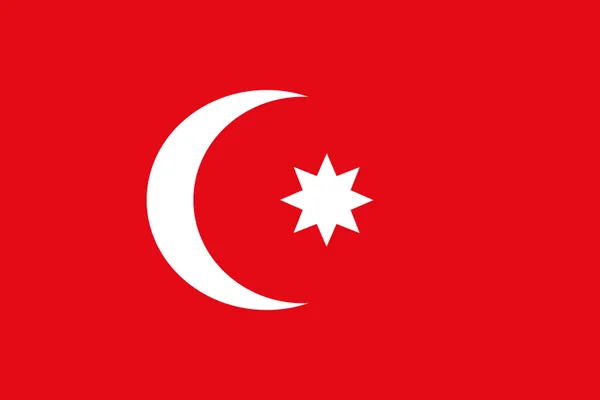
- Order
- XVI
- Period
- 1299 – 1922
- Years (duration)
- 623
- Founder
- Osman Bey (Osman I)
- Centre
- After Karacahisar and Bilecik, successively Bursa, Edirne and Istanbul
About the state
Osman Bey, founder of the state and the dynasty, was according to the early Ottoman sources the son of Ertuğrul Gazi, who settled in the frontier region of Söğüt. According to the early Ottoman historiographical tradition, the dynasty descends from the Kayı tribe of the line of Oghuz Khan. Osman Bey became an independent bey after defeating a Byzantine army in 1302. The Ottomans took Bursa in 1326, and Orhan Gazi made it the centre of the principality.
According to the TDV encyclopedia, the victory of Kosovo in 1389 was a turning point for the Ottomans’ future in Europe and for Balkan history. After the Battle of Ankara, Emir Süleyman brought the treasury and the state’s official records to Edirne, and so Edirne became the seat of government. Mehmed II took Istanbul in 1453; this conquest is interpreted as the beginning of the period in which the Ottomans became an empire, and Istanbul became the new capital. The sultanate was abolished on 1–2 November 1922.
From Principality to State
According to the TDV encyclopedia, it is known that Osman Bey’s father was named Ertuğrul and Ertuğrul’s father Gündüz Alp. Descent from the Kayı tribe was embraced not only by the early chroniclers but also by the Ottoman dynasty itself, and the tamgas of this tribe were displayed on material objects. In the 13th century, as a result of the break-up of the Seljuks, Turkmen principalities such as the Karamanids, the Germiyanids, Karesi, Aydın, Saruhan, Menteşe and the Candarids emerged; the Ottomans, who at first attracted no attention at all, were among them. After the capture of Bursa, with the Battle of Pelekanon won in 1329 and the conquest of İznik (1331) and İzmit (1337), the Ottomans advanced right up to the heart of Byzantium. By taking Gallipoli in 1354 they secured an important bridgehead on the European side that would direct their later conquests.
The Ottoman principality set out on the path to statehood particularly from the reign of Murad I onwards; efforts to build a centralised system began and the foundations of the military organisation were laid. According to the TDV encyclopedia, in the Balkans the policy of “istimalet”, which reduced taxes to a reasonable level and prevented sectarian conflict, was effective in the spread and consolidation of Ottoman rule. According to the TDV encyclopedia, Ottoman rule played a great part in the survival of the Balkan mosaic of nations to the present day. Under Yıldırım Bayezid the state acquired a strong centralised structure; the old principalities of Anatolia were turned into Ottoman sanjaks, and the last Crusaders were defeated before Nicopolis in 1396. After the defeat of 1402, the struggle for the throne among Yıldırım’s sons, known as the “Interregnum” (1402–1413), ended in victory for Çelebi Mehmed.
The Imperial Age
According to the TDV encyclopedia, the classical Turkic-Islamic model of the state emerged in its mature form through the activities of Mehmed the Conqueror. Mehmed symbolised in his own person, through the titles “khan, sultan, kayser”, the Ottoman imperial idea, whose roots lay in the old Turkic concept of sovereignty, in Islamic sources and in the legacy of Eastern Rome. The Serbian Despotate was ended in 1459 and the Greek Empire of Trebizond in 1461; with the capture of Kaffa the Crimean Khanate also came under Ottoman protection. The attack of the Akkoyunlu bey Uzun Hasan was repulsed at Otlukbeli in 1473. The aims of the Safavid Shah Ismail in Anatolia came to nothing with the battle fought at Chaldiran in 1514; with the battles fought at Marj Dabiq in 1516 and at Ridaniya in 1517, the Mamluks ceased to exist. The conquest of Egypt and Syria raised Ottoman political power to a superior position in the Islamic world and also increased its economic power.
Under Süleyman the Magnificent, Belgrade was taken in 1521 and Rhodes in 1522; with the victory of Mohács in 1526 the independent Kingdom of Hungary came to an end. The activities of Barbaros Hayreddin Pasha in the Mediterranean at the head of the Ottoman fleet and the naval victory of Preveza in 1538 secured control of the western Mediterranean. The number of provinces, five at the beginning of Süleyman’s reign, rose to sixteen towards his death and to thirty-two by the end of the 16th century. After the failure of the Siege of Vienna in 1683, the Treaty of Karlowitz of 1699 resulted in the loss of the frontier regions that had been expanded since 1526. Between 1718 and 1730 there was a relatively prosperous period, later called the “Tulip Era”, and interest in Western culture and civilisation increased. The Treaty of Küçük Kaynarca of 1774 made Crimea independent and opened the Black Sea to Russian ships.
State Organisation and Army
According to the TDV encyclopedia, the Ottoman political and administrative organisation, while a continuation of the practices of earlier Turkic-Islamic states, developed over time into a model of its own. The Ottoman conception of sovereignty and kingship, though based essentially on the Islamic understanding, was also considerably influenced by the old Oghuz töre. The padishah exercised his power through institutions such as the Imperial Council (Divan-ı Hümayun), the financial administration and the kul system, and through officials such as the grand vizier, the agha of the Janissaries, the şeyhülislam, the kadıasker and the nişancı. Whereas earlier Islamic and Turkic states had dozens of divans, reducing them to one was a new practice among the Ottomans. In the council the grand vizier dealt with the administration of the country and with timar matters, the kadıaskers with religious and legal questions, and the defterdars with financial affairs. Topkapı Palace, which served the padishahs for nearly four centuries, consisted essentially of the Birun, the Enderun and the Harem; from the mid-15th century the Enderun was the most deeply rooted educational institution outside the madrasa. In provincial administration the largest basic unit was the eyalet, beneath which were sanjaks, kazas and nahiyes.
The first regular units were the infantry (yaya) and mounted (müsellem) forces recruited from Turkish youths in the time of Orhan Bey. It is generally accepted that the Janissary Corps, the most influential and largest of the Kapıkulu corps, was founded under Murad I after the conquest of Edirne. The main military strength of the state, however, consisted of the timariot sipahis in the provinces; those who held the land grants (dirlik), divided into three categories as timar, zeamet and has, were obliged to raise mounted soldiers according to their income. This system ensured the cultivation of the land on the one hand and met the state’s need for soldiers on the other. The Janissary Corps, whose order began to decline from the late 16th century, was abolished in 1826 under Mahmud II.
Language, Literature and Art
Murad II took care to revive the Oghuz-Turkmen tradition in difficult times, and important works of Turkish language and culture were produced. According to the TDV encyclopedia, Ottoman literature was centred on poetry and developed along three branches: divan poetry, tekke poetry and folk poetry. The classical age, which began under Süleyman the Magnificent and extended into the early 17th century, is regarded as the period of maturity of Ottoman literature; at the beginning of this period the Türki-i basit movement appeared, based on writing poetry with Turkish words.
According to the TDV encyclopedia, the period from 1538, when Mimar Sinan was appointed chief architect, to his death (1588) is the era in which Ottoman architecture reached its peak. In this period, besides buildings in city centres, water installations and staging-post complexes along the Rumelian and pilgrimage routes were built. From 1890 onwards the search for a national architecture began, and important projects were realised through the efforts of Mimar Kemaleddin, Mimar Vedat and Mimar Muzaffer.
Reform and the Final Period
After wars that ended in heavy defeats, the Treaty of Jassy of 1792 marked the beginning of the period of renewal and restructuring known as the “Nizam-ı Cedid”. Mahmud II embarked on radical reforms, especially after the abolition of the Janissary Corps, and sought to strengthen the central administration. The Tanzimat Edict was proclaimed on 3 November 1839, the Reform Edict on 18 February 1856, and the constitution on 23 December 1876. The TDV encyclopedia notes that the Tanzimat Edict had the character of an “Ottoman declaration of human rights”. On 23 July 1908 the Second Constitutional Era was proclaimed. With the Balkan Wars of 1912–1913 the Ottoman state lost its last Balkan territories and the first places it had conquered in Rumelia; however, the war that broke out among the Balkan states provided an opportunity to recover Edirne with a final effort.
In the First World War Ottoman armies fought on many fronts, including the Dardanelles and Galicia; on 18 March 1915 the Allied fleet failed to pass through the Dardanelles. The Armistice of Mudros, signed on 30 October 1918, documented the Ottoman state’s complete defeat. The Grand National Assembly, opened in Ankara, took on the task of liberating the homeland. After the abolition of the sultanate, the Grand National Assembly deposed the last padishah, Mehmed VI Vahdeddin, and on 19 November 1922 elected Abdülmecid Efendi as caliph. After the caliphate was abolished on 3 March 1924, Abdülmecid Efendi and all members of the Ottoman dynasty were compelled to leave the country.
Note on dates
The TDV entry on the Ottomans dates the state to 1300–1922. According to its entry on Osman I, Ottoman tradition records 1299 as the year of Osman’s conquest of Bilecik and of his independence; the same entry states that 27 July 1302, the date of the Battle of Bapheus, can be accepted as the founding date. The year 1299 in the Presidency list matches this traditional date.
About the flag
According to the Presidency, the view that the sun on the Presidential standard represents the Republic of Türkiye and its 16 stars the independent Turkic states was first put forward in 1969 by Akîp Özbek in his book “Türkiye Cumhurbaşkanlığı Forsu ve Taşıdığı Anlam”; Emrullah Öztürk, citing a document in the Presidential archives, notes that the view had already been voiced in 1962. The list of the 16 Turkic states and the shapes of their flags came to prominence after the Ajans-Türk press printed an album of the 16 Turkic states and their flags in 1969. The TDV Encyclopedia of Islam’s article “Bayrak” describes the flags of some of these states: according to Nesevî, the official flag of the Khwarazmshahs was black; the Golden Horde flag is shown as a red crescent on a white field; in the first half of the 19th century, the red banner with crescent and star was the national flag of the Ottoman state.