


















Avar Empire
The state that dominated Central Europe and the Balkans for about 250 years; its most powerful period was under Bayan Khagan.
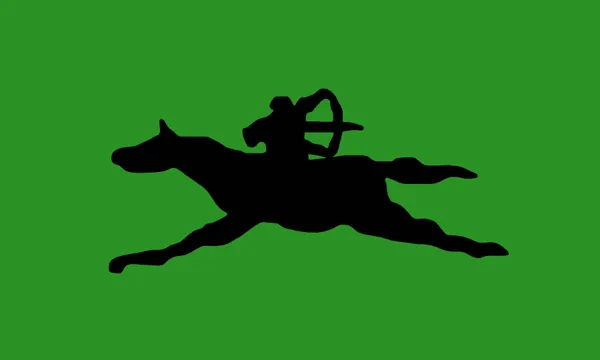
- Order
- VI
- Period
- 565 – 835
- Years (duration)
- 270
- Founder
- Bayan Khagan (thought to be the founder)
- Centre
- Between the Danube and the Tisza (under Bayan Khagan); in 796 the capital was in central Hungary
About the state
When the northern branch of the Uar-Huns could not hold out against the Göktürks, it reached first the Caucasus, then the north of the Black Sea and finally Central Europe. In 558 the Avars sent envoys to Byzantium asking for land to settle; from 568 the lands of Hungary were left to the Avars. Bayan Khagan, thought to be the state’s founder, moved its centre between the Danube and the Tisza and extended its borders from the Dnieper to the Elbe and from the Adriatic to the shores of the North Sea.
In 626 the Avars besieged Constantinople together with the Sasanians; having escaped the danger, Byzantium declared that day a feast, celebrated for centuries as a day of deliverance. It was the Avars who brought the stirrup to Europe. In 796 Pepin captured the Avar capital in central Hungary, and the state broke up in 805.
Origin and Name
The name of the Avars appears as Warkhon (War and Hun), Abares and Abaroi in Greek sources, as Awari in Latin sources, as Abari and Obri in Slavic sources and as Serir in Arabic sources. Views have been put forward that they were of Turkic, Mongol, Finno-Ugric or Ogur origin; according to the Turkic World Encyclopedia, thanks to recent archaeological excavations and research, their Turkic origin has begun to be accepted in the scholarly world. According to the Turkic World Encyclopedia, two Turkic groups called Var and Hun left Juan-juan rule after 350 and turned west, took part in the founding of the White Hun state, and then came to the north of the Caspian and the Aral, taking the name Abar (Avar), meaning “opposing, resisting”. The Avars who founded a state in Europe have no connection with the Juan-juan, who were destroyed in Mongolia in 555. The name of this tribe appears in the Kül Tigin inscription as Apar; the Avars were among those who attended the funeral of Mukan Khagan in 572. In excavations of the Avar period in Austria, Hungary, Albania, Czechia, Slovakia and southern Germany, the Turkic type has been found, alongside other types, in a noteworthy proportion.
Arrival in Europe and Bayan Khagan
The Avar envoy Kandik, who came to Constantinople in 558, aroused great interest with his long braided hair and dress resembling those of the Huns, and at the Byzantine court he spoke at length of the might of the Avars. Under the agreement made afterwards, Byzantium was to send the Avars tribute every year under the name of a “gift”, and the Avars in turn were to fight against Byzantium’s enemies. In 562 the Avars broke through the barrier Byzantium had formed of Slavs and Antes and reached the Danube region. When Justin, who came to the Byzantine throne in 565, refused to pay tribute, the Avars under Bayan Khagan attacked Byzantium and took the central parts of the Carpathians. Bayan Khagan acted together with the Lombards on condition that the Gepid lands be left to the Avars; the Avar and Lombard forces inflicted a heavy defeat on the Gepids, and the Avars took the banks of the Tisza. The Avars also defeated and captured the Frankish king Sigebert, who had made war on them; Bayan Khagan, however, made peace with him, and friendship was established between the Avars and the Franks.
According to Mualla Uydu Yücel, Bayan Khagan, at the end of a struggle he commanded in person, took Sirmium, which served as a bridgehead on the Sava River, on 14 August 582. The years of Bayan Khagan’s reign are disputed: according to G. Moravcsik he reigned between 568 and 582, while Yücel places his death, though not with certainty, in 583. Yücel stresses that Bayan Khagan brought together tribes bound by loose ties, created a strong central administration and strengthened his power in the Middle Danube basin enough for it to last for centuries. According to Yücel, his distribution of wine and bread to the starving people after the capture of Sirmium shows that Bayan Khagan placed humane feelings above everything.
Struggle with Byzantium and the Siege of 626
In 586 the Avars, together with the Slavs, besieged Thessaloniki; after this the Slavs began to settle permanently in the Balkans. In 601 a Byzantine army that crossed the Danube defeated the Avars along the Tisza River. Soon afterwards, however, the Avars chased the Byzantine forces as far as the vicinity of the capital; according to the Turkic World Encyclopedia, the emperor agreed to pay them a tribute of 100 thousand gold pieces a year, and the Danube became the border between the two states. After 616 the Avars raided Italy, and in 619 Emperor Heraclius saved Thessaloniki by making peace in return for large sums of money.
The Turkic World Encyclopedia states that the most important military undertakings of the Avars were the sieges of Constantinople: the first siege, so oppressive that it made Heraclius consider leaving the capital for Carthage, took place in 617 or 619, and the second was carried out in 626, again jointly with the Sasanians. In 626 the Avar vanguard of about 30,000 men arrived before the Long Walls on 29 June; on 29 July the Khagan advanced to the city walls with the greater part of his army of over 120,000. The Sasanian army had set up its camp between Kadıköy and Üsküdar; but since Byzantium controlled the Bosporus, the two allies could not make direct contact and tried to communicate by signals. The siege, which lasted from 31 July to 12 August, failed for lack of a navy. The feast declared in Byzantium to commemorate the deliverance was celebrated on the Saturday of the fifth week of Great Lent; it has also been established that the “Akathistos” hymn is connected with this Avar siege.
Organisation, Army and Culture
Avar titles are Turkic and were also used by other Turkic states; among them are titles such as khagan, tudun, tarkhan and bayan. The name Bayan is not Mongolian, as has been claimed, but derives from the Turkic root “bay” (rich). The real core of the Avar army was formed by Turks, supported by auxiliary forces drawn from Slavic and Germanic masses; thanks to this army the Avars kept market towns and trade routes secure. The Avar bow was made of several pieces, the Avar sword was straight or curved, and the stirrups that the Avars brought to Europe were circular. The Avars’ weapons and battle tactics were taken as a model by Europeans; when Emperor Heraclius reorganised his army in the Avar manner he prevailed against the Sasanians, and in this period the Byzantine army resembled the Avars in dress and weaponry.
Finds such as belt ornaments, buckles and gold jewellery have come down to us from the Avars. The Avars who settled in Central Europe created a new culture of their own in Hungary and other Central European countries.
Decline, Fall and Influence
The failure of 626 cost the Avars great prestige; central authority was shaken, and an economic and political crisis broke out. On the death of the khagan in 630, the Bulgars subject to the Avars rose in revolt, demanding that the new ruler be one of them; although the revolt was suppressed, the north of the Balkans passed to the Bulgars. The area between the Danube and the Sava was also left to the Slavs, and the Avars survived on the Hungarian plain throughout the 7th and 8th centuries. In 791 Charlemagne campaigned against the Avars and advanced as far as the confluence of the Danube and the Raab. In 799, under an Avar chief with the title tudun who had been baptised at Aix-la-Chapelle in 795, the Avars rose against Frankish rule; the chief Zodan, who rebelled next, also failed and surrendered in 803. In 805 a ruler named Theodore, who had become a Christian, is seen at the head of the Avars; under his leadership the last Avars settled between Carnuntum and Sabaria. According to the TDV Encyclopedia of Islam, the Avars soon became Christian, lost their language and were absorbed into larger populations.
According to the Turkic World Encyclopedia, the ethnic structure of Eastern Europe changed thanks to the Avars: the Lombards migrated to Italy, while the Slavs were brought from the north by the Avars and settled in the regions of the Vistula, the Danube and Bohemia. The reason for moving the Slavs was to meet the Avars’ need for crops. As a result of this systematic resettlement, the ethnic foundation of present-day Croatia, Serbia, Czechia, Slovakia and Poland was laid.
Note on dates
Academic sources date the state to 558–805 (TDV, Turkic World Encyclopedia); according to the Turkic World Encyclopedia, the capture of the capital in 796 ended the state. The year 565 in the Presidency list does not appear in these sources as the founding year; the Turkic World Encyclopedia reports that, according to T. Lewiczkiy, Bayan Khagan reigned from about 565 to 602. The year 835 does not appear in the sources consulted.
About the flag
According to the Presidency, the view that the sun on the Presidential standard represents the Republic of Türkiye and its 16 stars the independent Turkic states was first put forward in 1969 by Akîp Özbek in his book “Türkiye Cumhurbaşkanlığı Forsu ve Taşıdığı Anlam”; Emrullah Öztürk, citing a document in the Presidential archives, notes that the view had already been voiced in 1962. The list of the 16 Turkic states and the shapes of their flags came to prominence after the Ajans-Türk press printed an album of the 16 Turkic states and their flags in 1969. The TDV Encyclopedia of Islam’s article “Bayrak” describes the flags of some of these states: according to Nesevî, the official flag of the Khwarazmshahs was black; the Golden Horde flag is shown as a red crescent on a white field; in the first half of the 19th century, the red banner with crescent and star was the national flag of the Ottoman state.