


















Golden Horde State
A state that ruled the Kipchak Steppe with its centre at the city of Saray; most of its people were Turkic tribes.
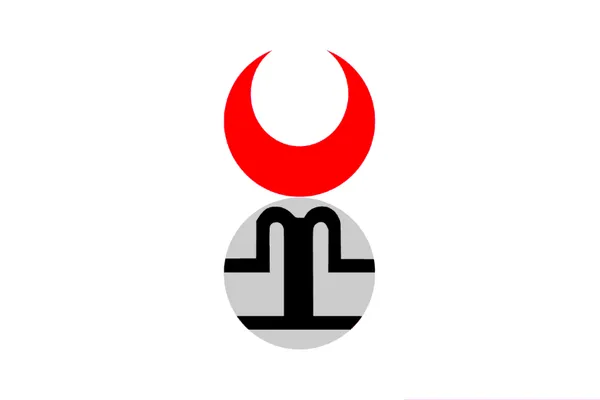
- Order
- XIII
- Period
- 1236 – 1502
- Years (duration)
- 266
- Founder
- Batu Khan
- Centre
- Saray (on the Volga)
About the state
The founder and first ruler of the state was Batu Khan, grandson of Genghis Khan and son of Jochi Khan. According to the TDV entry on the Golden Horde, in 1241 Batu Khan returned to the lower course of the Volga and established the seat of the “Horde” (the entry on Batu Khan dates his return to 1242); according to the TDV entry on Saray, the capital, Saray, was also founded by him on the left bank of the Volga. The state takes its name from the gilded upper part of Batu Khan’s white tent.
When Batu Khan’s younger brother Berke Khan embraced Islam, the Golden Horde became a Turkic-Islamic state in the full sense. During the reigns of Özbek Khan and Janibeg Khan the unity of the state was restored. Its most important state organ was the kurultai. Timur inflicted heavy defeats on Tokhtamysh Khan at Kondurcha in 1391 and at the Terek in 1395. The khanates of Crimea, Kazan, the Nogai, Astrakhan and Sibir emerged on the lands of the Golden Horde. Sheikh Ahmed Khan (1481–1502) could not rescue the state from the crisis into which it had fallen.
Foundation and Origins
The western campaign, decided upon in the time of Genghis Khan’s son Ögedei after Genghis Khan’s death in 1227, continued intermittently between 1237 and 1241. According to the TDV entry on Batu Khan, Genghis Khan organised the Jochid ulus according to the dual administrative system of the Turks, placing the “Right Wing”, that is the Western Kipchak Steppe and the Volga basin, under Batu Khan, and the “Left Wing”, that is the Eastern Kipchak Steppe, under his elder brother Orda Khan. Batu Khan’s armies first turned towards the Kipchak Steppe. The Kipchaks, who gave their name to these steppes, were a great Turkic people who from the mid-11th century had taken control of the plains north of the Black Sea and had absorbed the remnants of earlier Turkic peoples such as the Khazars, the Uz (Oghuz) and the Pechenegs. In 1239 the last resistance of the Kipchaks, the Bulgars, the Bashkirs and the As (Alans) was broken; thus all the lands as far as the Carpathians in the west and, in the south-west, as far as the point where the Danube flows into the sea passed into Batu Khan’s hands.
According to the TDV encyclopedia, it appears that Batu Khan began the western campaign with the idea of founding a new ulus and a new state. At the end of the campaign Batu Khan became the true founder of the Jochid ulus, named after his father, and of the Golden Horde Khanate, which formed the western wing of this ulus. When Chagatai Khan and Ögedei Khagan died one after the other in 1241, Batu Khan, now the eldest and most respected of Genghis’s grandsons, gained greater freedom of action. Thus the Golden Horde State was founded over a vast area extending from the Irtysh, including the lands north of the Aral Sea, to the Kama, the Volga basin, the Dnieper and the Dniester region. According to the TDV encyclopedia, the epithet “Sayın Khan” that Genghis Khan gave to Batu was used among the people in the sense of “good-hearted khan”.
Political History
When Batu Khan died in 1256 and his sons Sartaq and Ulaqchi, who succeeded him, also died within the same year, his brother Berke became khan. Berke Khan reached an agreement with the Sultan of Egypt, Baybars, fought Hülegü, who sought to control the Golden Horde, and defeated him. According to the TDV entry on Berke Khan, in his time the Golden Horde broke away from the great khaganate in Mongolia and became a fully independent state. Möngke Temür (1266–1280), who came to power after Berke, preserved the unity and independence of the state for some time longer through the cautious policy he followed. Under Töde Möngke Khan (1280–1287) the unity of the state was endangered, and the following twenty-five years became the Golden Horde’s first interregnum.
According to the TDV entry on Özbek Khan, the Golden Horde Khanate reached its “age of splendour” in his time. Özbek Khan probably embraced Islam in 1320 and took the name Muhammad. He also sought good relations with the Mamluks of Egypt; the 174-member Golden Horde embassy that went to Cairo in 1314 was received with great honour. Ibn Battuta, who came to the lands of the Golden Horde in 1333, described Özbek Khan as one of the seven greatest rulers in the world. Özbek Khan put an end to the Blue Horde dynasty; thus the two-part structure of the Jochid ulus, the White Horde (right wing) and the Blue Horde (left wing), came to an end, and the eastern left wing was attached directly to the centre.
During the reign of Berdibeg Khan (1357–1359) the Golden Horde entered a new period of turmoil. Tokhtamysh Khan, who seized power in the Golden Horde with Timur’s support, defeated Mamai Mirza on the Kalka river, which flows into the Don, ended the twenty-year interregnum and restored unity in the Jochid ulus. However, the solidarity between the rulers of the two Muslim states did not last long, and they fell out over the question of Azerbaijan. After Timur’s victories over Tokhtamysh Khan, the Golden Horde Khanate began to break up rapidly.
State Organisation
The organisation of the Golden Horde was laid down according to the common principles of Genghis Khan’s yasa and Turkic custom (töre), while the local characteristics of the lands brought under its rule were also taken into account. The administrative organisation was arranged according to the old Turkic system of government, and steppe traditions and institutions were also maintained. The people’s gradual settlement on the land and the growth of agriculture, trade and industry led to the reorganisation of state administration according to the conditions of settled life.
The kurultai met on occasions such as the election of khans, the declaration of major wars and the discussion of important matters of state. Members of the dynasty, emirs from the various regions of the “ulus” and the khan’s consorts (hatuns) took part in the kurultai. The hatuns lived in separate palaces and estates and, as in the Turkic khaganates, played a role in governing the state together with the khan. All correspondence in the country was carried out by “divan scribes” (divan bitikchis), and separate offices dealt with matters such as roads, taxes, trade and industry. This organisation continued in the new khanates founded after the Golden Horde broke up.
Religion and Culture
At first some of the Mongol elements in the ruling class had not embraced Islam. Saif al-Din al-Bakharzi, one of the deputies of Sheikh Najm al-Din Kubra, played a role in Berke Khan’s conversion to Islam. Berke Khan opened schools for teaching the Qur’an, kept imams and muezzins in Saray and patronised scholars. Islam spread rapidly especially in the time of Özbek Khan; many cities, above all Saray, were adorned with mosques, madrasas and lodges. Well-known scholars such as Qutb al-Din al-Razi and Sa‘d al-Din al-Taftazani came to Saray upon invitation.
Saray, which came under the influence of Khwarazmian architecture, also became a centre of learning. According to the TDV encyclopedia, Turkic, Mongol, As, Circassian, Greek and Russian communities lived in separate quarters of the city, which had thirteen Friday mosques. The sources mention the names Saray-i Batu, Saray-i Berke and Saray-i Jadid; all of them served as capitals of the Golden Horde. As reported by the TDV encyclopedia, Saray-i Jadid, with a population of 75,000, was one of the largest cities in Europe in the mid-14th century.
Economy and Trade
Batu Khan tried to revive urban life and trade in the Kipchak Steppe, which had suffered great damage during the Mongol conquest. To this end he made use of an advisory council that included merchants of every nation and religion. He founded his capital, Saray, at the point where the caravan routes running from Asia to Europe and from Upper Bulgaria southwards intersected. Saray became a great trading centre where merchants from Turkestan, Iran, Anatolia, Byzantium, the Russian principalities, Genoa and Central Europe met. Cities such as Azak, Bulgar, Derbent, Saraychik and Hajitarkhan also developed in culture and trade, and some of them became import and export ports.
Under an agreement signed in 1333 on behalf of Özbek Khan with a Venetian embassy, a concession of land to be used as a market-place on the part of the Tana river near Azak was granted, and in return the payment of a 3 per cent tax was accepted. However, according to the TDV encyclopedia, because trade between Europe and Asia went mostly by the Near Eastern route, the Golden Horde did not make much economic progress. The state’s revenues rested on taxes levied on the people, on the dependent Russian principalities and on foreign merchants.
Fall and Legacy
Timur’s campaign of 1395–1396 brought about the end of many Golden Horde cities, including Saray. When Timur Qutlugh, whom Timur had proclaimed ruler of the Golden Horde, died in 1400, Edigü Mirza seized power and governed the state until 1419. Ulugh Muhammad, who regained the Golden Horde throne in 1427, was forced some time later to take refuge with Hacı Giray, who had declared himself khan in Crimea; he later went north and founded the Kazan Khanate. Sayyid Ahmad Khan (1445–1465) and Ahmad Khan (1465–1481) continued the struggle against the Crimean Khanate and the Principality of Moscow; this struggle continued even after Crimea passed under Ottoman rule in 1475.
Batu Khan is regarded as the founder of the Golden Horde State and of the Crimean, Kazan and Nogai khanates, which later emerged as its remnants. The struggle between Tokhtamysh Khan and Edigü became the subject of epics among the Nogais, Bashkirs, Kazakhs, Uzbeks and Karakalpaks.
Note on dates
The TDV encyclopedia dates the state to 1241–1502; according to its entry on the Golden Horde, 1241 is the year Batu Khan established the seat of the Horde (its entry on Batu Khan dates his return to 1242). The starting year 1236 in the Presidency list is the same as in a list on a 1969 calendar (Öztürk 2015).
About the flag
According to the Presidency, the view that the sun on the Presidential standard represents the Republic of Türkiye and its 16 stars the independent Turkic states was first put forward in 1969 by Akîp Özbek in his book “Türkiye Cumhurbaşkanlığı Forsu ve Taşıdığı Anlam”; Emrullah Öztürk, citing a document in the Presidential archives, notes that the view had already been voiced in 1962. The list of the 16 Turkic states and the shapes of their flags came to prominence after the Ajans-Türk press printed an album of the 16 Turkic states and their flags in 1969. The TDV Encyclopedia of Islam’s article “Bayrak” describes the flags of some of these states: according to Nesevî, the official flag of the Khwarazmshahs was black; the Golden Horde flag is shown as a red crescent on a white field; in the first half of the 19th century, the red banner with crescent and star was the national flag of the Ottoman state.