Dīwān Lughāt al-Turk
The dictionary written by Mahmud al-Kashgari to teach Turkic to the Arabs and to show that Turkic is a language as rich as Arabic; according to the TDV Encyclopaedia of Islam, the first dictionary of the Turkic language.
- Author
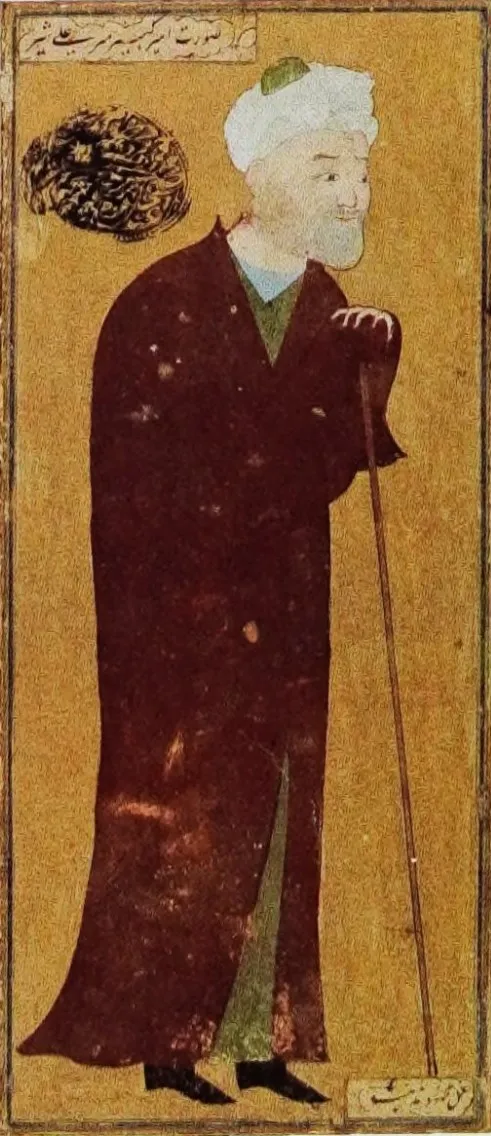
- Kâşgarlı Mahmud
- Period
- 1072–1074
- Format
- Facsimile
- Details
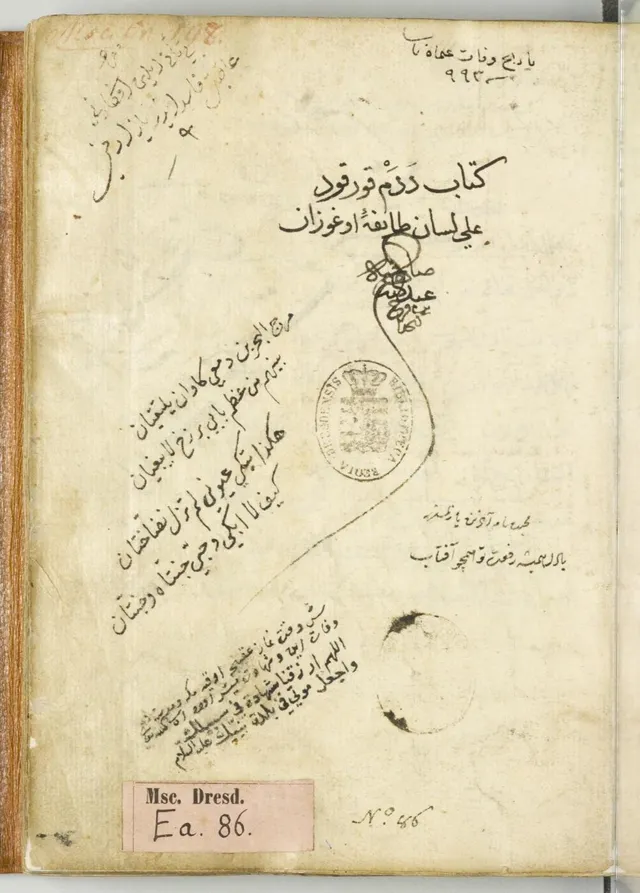
- Sole manuscript: Millet Manuscript Library, Ali Emîrî Arabî no. 4189 · 319 folios
- State
- Karakhanids
- Region
- Kyrgyzstan
About the work
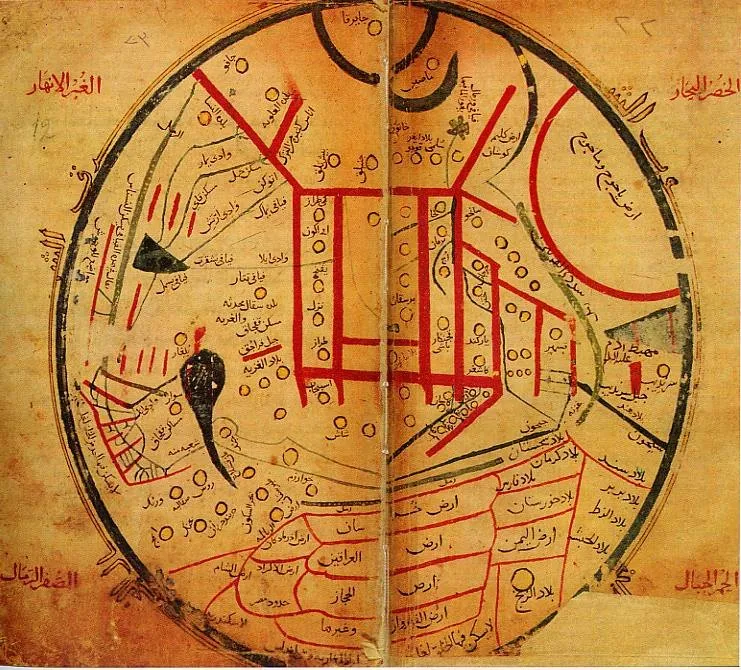
The Dīwān Lughāt al-Turk is arranged as a dictionary from Turkic into Arabic; the headwords are in Turkic and the explanations in Arabic. The TDV Encyclopaedia of Islam describes the work not merely as a dictionary but as a grammar book showing the phonological and morphological features of 11th-century Turkic, a source of personal, tribal and place names, and an encyclopaedic work containing information on Turkic history, geography, mythology and folk literature. Idioms, proverbs and samples of poetry are given in the explanations of the headwords; according to the TDV, the poems in the work are regarded as the oldest surviving examples of Turkic folk poetry. The map in the work shows the lands inhabited by the Turks together with the peoples with whom they were in contact; the TDV states that this map is of great value as the first map of the Turkic world.
According to the TDV Encyclopaedia of Islam, Mahmud al-Kashgari began writing the work on 25 January 1072 and, after revising it several times and making additions, completed it on 12 February 1074; the Manuscript Institution of Türkiye, however, gives the equivalent of the same Hijri date as 10 February 1074. According to the TDV, the work was probably presented in Baghdad in 1077 to Abu’l-Qasim Abdullah, son of Caliph al-Muqtadi bi-Amr Allah; according to the Manuscript Institution of Türkiye, it was presented to the Abbasid Caliph Abu’l-Qasim Abdullah bin Muhammad al-Muqtadi bi-Amr Allah. According to a publication of the Manuscript Institution of Türkiye, Mahmud al-Kashgari came from Barsgan near Issyk-Kul, within the present-day borders of Kyrgyzstan, and lived in the period of the Karakhanid dynasty. While the work focuses mainly on Karakhanid Turkic, it also gives an important place to the Oghuz.
The only known manuscript of the work is held in the Millet Manuscript Library in Istanbul, in the Ali Emîrî Arabî collection under no. 4189. Copied from the author’s copy in 1266 by Muhammad b. Abi Bakr b. Abi’l-Fath al-Sawi, this manuscript has 319 folios. According to the TDV, the work, whose existence had been known since the 14th century but which had not come to light for a long time, was found in Istanbul in the years following the proclamation of the Second Constitutional Era and was purchased by Ali Emîrî. According to the Manuscript Institution of Türkiye, the work was inscribed in UNESCO’s Memory of the World in 2017.
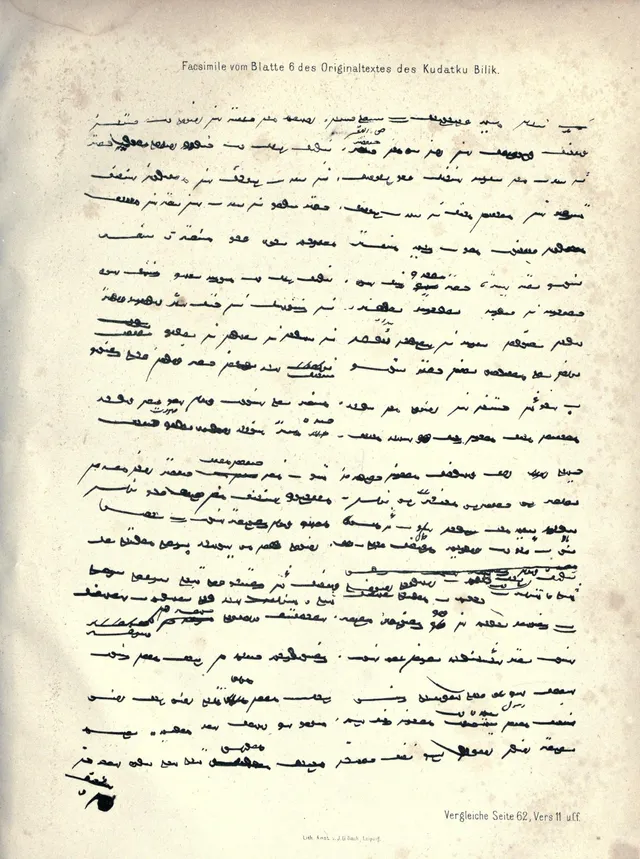
The work was first published by Kilisli Rifat Bilge in Arabic script in three volumes (Istanbul 1333–1335); according to the Manuscript Institution of Türkiye, the first two volumes were printed in 1333 (1915) and the third in 1335 (1917) at the Matbaa-i Âmire. Besim Atalay’s Turkish translation was published in Ankara in three volumes and an index volume; the index volume is dated 1943. Facsimiles of the manuscript were published in 1941 by the Turkish Language Association and in 1990 by the Ministry of Culture; in 2024 the Manuscript Institution of Türkiye published a second edition consisting of a study and a facsimile. The work was translated into English by Robert Dankoff under the title Compendium of the Turkic Dialects (Harvard 1982–1985).